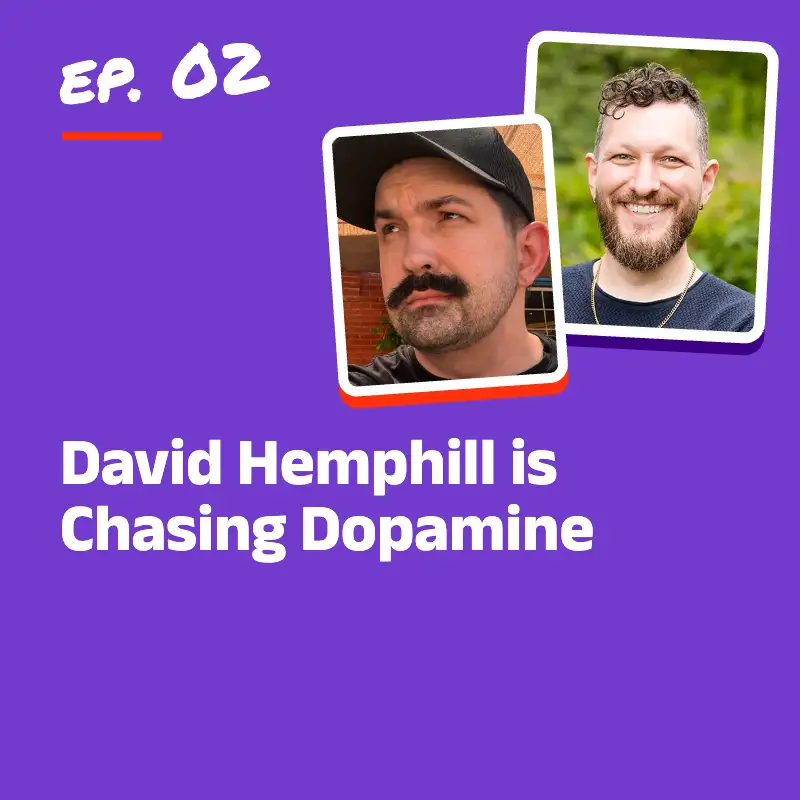
David Hemphill is Chasing Dopamine
Matt Stauffer:
The Laravel Podcast is brought to you by Tighten, your friendly neighborhood Laravel experts. Check us out at tighten.com and also by other sponsors you will hear about later in the episode.
Matt Stauffer:
Hello and welcome back to Laravel Podcast Season 8. I'm your host, Matt Stauffer CEO of Tighten And This season I'm bringing members and friends of the Laravel community to talk about what's on their minds this week. My guest today is David Hemphill, who, unlike the majority of my guests, did not give me a way to introduce him. I think he even said something like, I can't wait to see how you introduce me. So how do you introduce David
David Hemphill:
Yeah.
Matt Stauffer:
Hemphill? David Hemphill, OG, one of the many OGs of the Laravel community.
creator of or co-creator, excuse me, of Laravel Nova. creator of, was it Adam CSS Framework and you know part of the origin story was no no not Adam. What was the name of yours? Beard? Beard, beard CSS
David Hemphill:
Beard Beard
Matt Stauffer:
framework and a part of the the origin story of Tailwind as a result. man, a lot of things I want to describe you as like are part of the conversation. So yeah, so freaking MMA type fighter.
Keyboard nerd, guitarist, singer, songwriter. what else do you say about David Hemphill? Man of many interests and talents. Welcome to the podcast, David. How you doing? And do you want to be hemp? Are you hemp?
David Hemphill:
some people call me Hemp some people call me David. It's just whatever we want to do.
Matt Stauffer:
Okay. You've
been David for me for the longest time, so welcome my friend. How you doing?
David Hemphill:
I'm doing well. Thanks for having me on.
Matt Stauffer:
Yeah. So as you know, there's no set topic. We're just catching up, getting to know you. And one of the things I do like starting with is a combination of like what have you done in the past people don't know about you, what's on your mind right now. So we're gonna start with the past real quick. Because not everybody might know that you are you have a history. I don't know if you're doing I don't think you're doing it right now, of doing is it MMA? It's w tell us about the fighting stuff that you do, man. That's that's really what I wanna do.
What's your backstory there? What is the actual title of it for people who don't know about this kind of stuff like myself?
David Hemphill:
Yeah, it's mixed martial arts, so it's very similar
Matt Stauffer:
It is, okay.
David Hemphill:
to the like UFC style fighting
Matt Stauffer:
huh.
David Hemphill:
where you're in a a cage. You know, it could be an octagon, but it can
Matt Stauffer:
So you did that stuff. You
got in there bare knuckle and we're wrestling, fighting, jujitsuing people. you do? Okay. Okay. Eight ounce gloves is
David Hemphill:
Well well we have gloves. We have eight ounce gloves, so it's not a lot of
Matt Stauffer:
not much, right?
David Hemphill:
No. they're four ounce gloves, actually, sorry. Eight ounces is small boxing gloves, but yeah.
Matt Stauffer:
Okay, so even more not much. Yeah, so it's not boxing
gloves. We're talking like little baby patting over your knuckles, basically.
David Hemphill:
Yeah, just I wouldn't even say there's even hand protection. It's more about like preventing like really, really nasty slices from like sharp knuckles, you know, like it's 'cause it's like
Matt Stauffer:
yeah, yeah.
David Hemphill:
unnecessary to have like a bunch cuts that way. But that sounds very intense.
Matt Stauffer:
So what led you in
Yes, it does! What led you into choosing to get into a ring and fight people?
David Hemphill:
I don't know. I think I've always had like a a stint of chasing d dopamine and adrenaline rushes.
Matt Stauffer:
Okay, fair.
David Hemphill:
And I was I came from a very small hometown and so I was basic I was basically just fresh well, I'd been married a few years and I heard fr through actually the associate pastor at the church I was at that there was a new there was a guy that was involved,
with another guy that was very fundamental, like to the UFC's upbringing,
Matt Stauffer:
Okay.
David Hemphill:
Pat Miletich, and and he was opening a new gym and I was like, my gosh, this sounds crazy. Like
Matt Stauffer:
In your local town?
David Hemphill:
Yes, in our local town. He was starting to take class he was offer classes and he had you know he was like an OG. And and back then, I mean that was I was twenty three. I was forty two now. So that was still pretty
Pretty early in the sport, you know, people didn't quite understand it like they do now. You know, you see it on a ESPN and Paramount, whatever now. But then you were still kind
Matt Stauffer:
It was smaller then.
David Hemphill:
of seeing it like in your front row video stores where you know you could buy a tape next to the, you know, faces of death video cassette. You know, like
Matt Stauffer:
Yeah.
David Hemphill:
people still thought of it as like this savage thing and less like a sport. But yeah, so the just the thought of just getting in there and like and fighting and punching, I don't I was always like a
I liked that aspect of it. not because I like hitting anybody.
Matt Stauffer:
Okay. Had you done anything prior?
Did you wrestle in high school or anything like that? Okay. Okay, so you did.
David Hemphill:
No. I mean I had three brothers, but and
so the closest thing was like my little brother and I would would wrestle during summer vacation when my our parents left us home, you know, while they went to work, you know.
Matt Stauffer:
Mm-hmm. Could work. Yeah.
David Hemphill:
but but no, really, I didn't play any sports. I I was voted most artistic in high school.
Matt Stauffer:
Really?
David Hemphill:
and, you know, played in bands and stuff. So it wasn't it was very
out of character for people to think I would be interested in that sort of thing. But I I really found myself
Matt Stauffer:
Hm. Okay. Were you at least like t
physically fit at the time? Were you lifting weights or running or anything like that?
David Hemphill:
No, I was like a I mean, I was a buck twenty five at the time. So I was a very, very small. yeah, for for six foot that's pretty light. That's you know, I was very, very thin.
Matt Stauffer:
Yeah, okay. Yeah. Okay. Yeah, you're a little guy. Huh. Yeah. For six foot that's
very light.
David Hemphill:
Yeah, very light. That's my whole life basically being really, really skinny like that. and so it was just it was good. I I got in there and learned a lot about like it it almost seemed like secret knowledge, honestly. It seemed like 'cause I remember one time there was a very large guy. He was like a g he had to be like six five, two hundred thirty, something like that, and came in and I s I remember submitting him.
being a buck twenty five. Like and he was trying too. These guys when anybody that's been around MMA gyms and stuff like this know that when people come in, they come in with like a like an anxiety or like a I need to make sure I don't get like demolished the first day and embarrass myself. You know, the ego comes in. And for somebody that like this, you know, I hadn't even had that much experience, but to be able to like submit somebody that big, that was like a huge confidence boost. It's like, wow, this stuff actually really works.
Matt Stauffer:
That's really cool.
So okay, so buck twenty five is a hundred twenty five pounds for y'all who don't know. Submitting somebody just means basically winning, right? Like you got him to tap out or whatever it is. Okay.
David Hemphill:
Yes. It
was I got him to a position where he had a choice between breaking his arm or or or tapping out and saying, I'm done. You know, in the gym it's not that serious, but it you know, i it we knew it was done.
Matt Stauffer:
Breaking some exactly. Or say or tapping out, yeah. Yeah. Yeah. In theory.
And the guy is close to twice your size and you were able to do that.
David Hemphill:
Yeah. He was at least two and a half times his my size. Yeah. Good old Lonnie. He came in and he trained a lot after that 'cause he he saw like, Wow, I'm big and if I could learn this
Matt Stauffer:
Holy crap. Yeah. Okay.
David Hemphill:
stuff, I'd be unstoppable.
Matt Stauffer:
All right. So this is 20 something, 23 years ago, I think you said. Or 20, no, 19, whatever. It's it's two decades ago that you were doing all this. So what's the story between showing up to the gym for the first time and where you are today? Because I don't think you're actively fighting today, but I know you have in the past. So, like, kind of where did you go through training versus is it called competing? Is it called fighting? What do you call it? Yeah, okay.
David Hemphill:
Yeah, whatever.
Matt Stauffer:
The thing where you're doing it and people are watching you and there's TV cameras. What was the story from going from training up to that?
David Hemphill:
Yeah, I mean I had trained for about a year and I I I am amassed a small amount of skill in it and really it became like can I actually do this? Like the people I see on the like the video cassettes, you know, and and then there became opportunities where they would start asking people in the gyms, like, Do you have anybody that wants to be on this show, local show? And all these shows are like unsanctioned, like small time, you know, the
state doesn't oversee it, no athletic commission's involved. It's just like a it's kind of a spit in a handshake. We're gonna we're gonna go fight. And sometimes it's at somebody else's gym, like you're going into their territory, you know, but a lot of times
Matt Stauffer:
Uh-huh. my god.
David Hemphill:
it's like it at bars and stuff. and I I got in there and that first time meant and getting that win, especially that first time I fought, was like very addictive. Very, very addictive.
Matt Stauffer:
Yeah. How
how do so what kind of things do you track? I understand you track wins and losses. Is there rounds? Is it how many rounds you won? Is it how many minutes to submission? Like what kind of stuff matters? Because I I truly don't understand major UFC at all.
David Hemphill:
they they track everything now. But
Matt Stauffer:
Mm-hmm.
David Hemphill:
really the thing that matters to the fighters the most is like the win loss. You know, the win loss draw or no contest.
Matt Stauffer:
Okay. So you you went and told your friends I won. That was that was the main it wasn't
I won in twenty minutes, what it was I won. And that was really kind of the core thing at the time. Okay. Okay.
David Hemphill:
Yeah, i I won in the first round. And so in
in that fight we went through the f the first round and at this when you're supposed to answer the bell for the second round, he didn't answer. He like, I can't do it. I can't see out of my eye my left eye. So it's like
Matt Stauffer:
Holy crap. Okay, so what is round is there four rounds? How how do rounds work? I'm sorry, I really don't know any of this.
David Hemphill:
It depends I mean, in the UFC it's it can be five, three minute or three five minute rounds or five, five minute rounds if it's like a championship fight or a main event fight. On the smaller like amateur levels when you're starting, it could be three minutes three, three minute rounds, it could be three, five minute rounds if it's like an amateur championship or sorry, three three five, three minute rounds. Yes, there's a minute
Matt Stauffer:
And it's a does a round just kind of like force a break after a certain amount of time has passed? That's the perma pre per okay.
David Hemphill:
break between each round.
It kinda helps you out, you know, you can get a little bit of rest and get cleaned up if there's, you know, blood or something.
Matt Stauffer:
I've watched boxing movies.
You go in the corner and he s uses a little squishy thing and shoots water and s puts something. Yeah, totally. I've seen all that. Yes, exactly. That's exactly what I'm thinking.
David Hemphill:
Yeah. Y the the little magnetic thing that they pr the pr the coal press and their Cut me, Mick.
Matt Stauffer:
Yes, exactly. what happens if you get to the end of all the rounds and nobody has submitted? Is there some kind of scoring that the judges do, or is it a draw at that point?
David Hemphill:
Yeah, there's there's
three judges that judge based on yeah, whatever criteria the Athletic Commission decides is
Matt Stauffer:
Okay.
David Hemphill:
is appropriate. Mostly it's aggression and like who's most in the most dominant position for the longest. yeah, that kind of thing.
Matt Stauffer:
Okay. All right. So you you got your first win in the first round. Go back were you like sign me up again, coach? Were you back at it again a month later? You know, what was your timeline like?
David Hemphill:
I I I think I turned it around very quickly. I think I fought again in three months, which is pretty aggressive for
Matt Stauffer:
Is it okay?
David Hemphill:
I was I was training really like almost professionally, 'cause I had nothing going. I worked in
Matt Stauffer:
Okay.
David Hemphill:
a factory at the time. I read or I guess at at that point I was like ironically a a worship pastor at a church, but so you can imagine this the like the kind of like the the diaspora of like opinion like
Matt Stauffer:
huh. Dichotomy. huh. Yeah. yeah.
David Hemphill:
And my friend, he he was a pastor too, the one that introduced me to it. His his nickname was actually the Pastor of Disaster. So cheesy, but
Matt Stauffer:
That's incredible.
David Hemphill:
so it was all the talk. But yeah, it was it's just addictive. I mean, there's something about like even I don't know, maybe this is me, maybe it's just the way I'm wired, but just something like bad could happen, and then you getting out
Matt Stauffer:
Uh-huh.
David Hemphill:
of it and then like using your brain. I think that was the the big thing for me that was the most fun about it, is because
Philosophically, I don't really want to hurt anybody. Nobody's trying to I don't have bad feelings for anybody. I don't want anybody to get hurt. to me it's like, okay, let's see how much we can over the eight weeks get in our body in a certain physical shape to get down to the weight we need to be to fight without like winding up passing out or, you know, you know, having you know, getting injured during training and assuming that both competitors are on
similar levels physically, it becomes then just a chess match of like, can
Matt Stauffer:
Yeah.
David Hemphill:
I can I feint in a certain way that makes you open up and then that leaves me a spot to take advantage, you know, and then it's like
Matt Stauffer:
Right. Yeah.
David Hemphill:
or can I put you know, can I smother you while I'm we're on the ground and keep it keep you to where you can't hurt me, but I can also find a hole to get you. You know, the chess match of it always was super interesting to me. And, you know, there's a little bit of
Matt Stauffer:
Hm. Yeah. Yeah. It's 'cause interest
David Hemphill:
that like
You know, being like
Matt Stauffer:
Go ahead.
David Hemphill:
you know, you grow up like watching like kickboxing movies and stuff, you're like V Van Damme, you're like, I wanna kinda do that a little bit. That's kinda fun too.
Matt Stauffer:
Yes. And
that's really helpful because I always think of you as this like gentle but terrifying kind of person. Like I have a couple of people in my life where I'm like, you're a sweetie, but I know that if something went wrong, like I would want to be on your side, right? And you're kind of one of those people. And so it's helpful to hear you think about it. And like you're this is not and out now, I I'm curious if you say there is some kind of aggression let out, but you're not like I'm not doing this because I want a sanctified way to bloody people up. You're like, This is a skill, this is a growth. And yes, fighting is a part of the thing. But
Is there a a part of you that's like, you know what, like this is the best if if you could continue fighting on a regular basis, is there an element of like release and aggression let out, or is that not really a part of the fight?
David Hemphill:
There there definitely is. I mean, you know, as you as anyone goes through life there's things that happen and there's, you know, there's ways to release that. And I think you know, maybe it's one of the less healthy ways to do it as
Matt Stauffer:
Ha ha ha.
David Hemphill:
far as like the physical toll it can take on your body.
Matt Stauffer:
Sure, it takes on your body. Yeah, yeah.
David Hemphill:
but it it was always good. It was it was always a way to find like that adrenaline rush, that dopamine
Matt Stauffer:
Yeah.
David Hemphill:
that sometimes like
normal life doesn't give you, especially as somebody like with ADHD, it's hard to find those things that r you could really focus
Matt Stauffer:
Yeah.
David Hemphill:
on like and you're like, that's I can get into a flow state about this. And so that's where
Matt Stauffer:
Yeah.
David Hemphill:
like the c the commonalities with like programming and fighting,
Matt Stauffer:
Yeah.
David Hemphill:
there are there is a connection there for me.
Matt Stauffer:
Okay, so you you did that first win. I know that you have like a win loss history. When when you had your first loss, whenever that was, did that make it sort of like, I'm done with this or did it motivate you to try harder? Like what was the first your first time losing in a competition? What did it feel like?
David Hemphill:
I'm trying to the first time I lost, I w was in a I went to Clinton, Missouri, and I fought the local high school wrestling coach in at their gym. So they had they put like seats, seating in there. They sold like, you know, cage side tickets and stuff. Like it was a whole thing, but it was their it was their backyard, you know, and I'm fighting their like high school wrestling coach.
Matt Stauffer:
Yeah. Yeah. Everybody knows the guy. Yeah.
David Hemphill:
and
I mean, I I remember walking out and they're like, Kill him. Like like literally
Matt Stauffer:
my god.
David Hemphill:
yelling like kill him. Like And you know, like
Matt Stauffer:
Who does that?
David Hemphill:
at me at that point, I'm I'm just like at that point you're so hyped up for the whole week. You're just like, I can do anything and I'll walk through
Matt Stauffer:
Yeah, yeah, you don't care. Yeah. Yeah.
David Hemphill:
every you know, the whole crowd and get in there. And honestly, I I thought really well. I I remember and I I have the video proof. Thankfully I had a Flip video camera cage side, one of my people were
Matt Stauffer:
Nice.
David Hemphill:
filming and I remember
getting him in an arm bar, which is, you know, just hyperextending his his elbow and hearing it pop and thinking, okay, this sight's gonna be over. I've got him. Like and
Matt Stauffer:
Right, I won it.
David Hemphill:
he didn't he didn't stop. And this I mean I was like, okay, what's going on? Okay. I'm gonna try to get him in it again. And I did it again. His arm popped. He would not tap. It's so it was like, Okay, what is happening here?
Matt Stauffer:
Now what?
David Hemphill:
Yeah. And I think that kind of got in his head because he was like, Okay, I'm a wrestler and wrestlers just
for context, don't like to be on their back. So if I was to move to get him on his back, he would scramble out and he's like, I don't want to be in that position at all. That's just how
Matt Stauffer:
Uh-huh.
David Hemphill:
they're how wrestlers are taught. But a jiu-jitsu person who knows jujitsu is very comfortable off their back. They're like, I'll lay on my back. And so
Matt Stauffer:
Yeah. They love being on their back. Yeah. Yeah.
David Hemphill:
looking back, I was very comfortable and was never in danger from anything he did. But the the the appearance and the guidance at the time for judging was whoever's on top
has top position is in the dominant position.
Matt Stauffer:
Mm-hmm.
David Hemphill:
Doesn't matter how many submissions you're throwing up or how much trouble they seem like they're in, you know, if you're on top you win. Also, come on. We're in his gym at his in his hometown.
Matt Stauffer:
Yeah, right.
David Hemphill:
Where are they picking the judges from? They're not sanctioned
Matt Stauffer:
Yeah, yeah, for sure.
David Hemphill:
judges, so they're not just random state judges. They're people they found and, you know, it's
Matt Stauffer:
Yeah.
David Hemphill:
fair.
Matt Stauffer:
So does this mean that you lost by points, you didn't lose by submission? Okay.
David Hemphill:
yeah, I lost by by decision at the end, yeah.
Matt Stauffer:
Okay. Well that feels a lot different, especially if you can kinda like look at it and be like, well I understand why and I think in another setting this exact same fight might have had different points.
David Hemphill:
Yeah. Eve even the the ref, the ref was an active UFC fighter, which was really cool at the time. You know, a lot of at that time there was a lot of people and it's still to some some extent there's a lot of professional fighters that you would see on TV that are not making any money and they they go to they do meet and greets at these small shows or they'll referee fights, you know, for extra money as you know, between
Matt Stauffer:
Mm-hmm.
David Hemphill:
fights, and training. And so and even him then he was like
Y you won that, but you were just on the ground the whole time. So, you know, you didn't and before that the first
Matt Stauffer:
Okay. Great. So you feel good about that?
David Hemphill:
two fights I was d I was like stand up. All stand up. There was no like jujitsu. So it was it was good because it taught me that I could do all of those jujitsu skills and a and
Matt Stauffer:
Yeah.
David Hemphill:
express my skills in a different way, but it kinda stunk. And then I lost the next
Matt Stauffer:
Yeah.
David Hemphill:
one, so I was two of two. Now the next one I lost legitimately to a submission by that person
Matt Stauffer:
Okay.
David Hemphill:
and then it was like, Okay, maybe I'm not that good.
You know so But yeah, and you're
Matt Stauffer:
now you're shook. yeah.
David Hemphill:
like I was like, Okay, well I can't you can't go down on a loss. That's the the typical like
Matt Stauffer:
Uh-huh.
David Hemphill:
that's the the stereotypical fighter like mentality
Matt Stauffer:
Uh-huh.
David Hemphill:
is like, okay, I can't go out on a loss. Just like all the great champions go out on like a four or five, six fight losing streak 'cause they they they get to the point where they're like, I'm the champion, nobody can beat me and then that was just a fluke, I lost. That was you know, just lucky. I didn't have a good cut, you know
Matt Stauffer:
Yeah.
David Hemphill:
And then eventually they And so it was like w
Matt Stauffer:
Just realized it's time to tap out, yeah.
David Hemphill:
Yeah, can I can I actually do this? And I went up with a nine and three record. So I I only lost one other time,
Matt Stauffer:
Okay.
David Hemphill:
which was my last time that I fought. and I was thirty seven, it was twenty nineteen, I don't know.
Matt Stauffer:
Okay. Yeah, so I was gonna say, so you're now forty two, you have young kids and a house and a wife and a career, and also a forty two year old body with respect. I'm guessing you're not getting back into MMA anytime in the near future, but I actually don't know. Is that the type of career where people go in keep going longer, or is it one of those where like once you're in your thirties you're on you've got a ticking clock kind of situation?
David Hemphill:
It's it's pretty it keeps up with the most sports that you hit late thirties, it's people start like, All right, how long you gonna be able to do this? How and you
Matt Stauffer:
Okay, got it.
David Hemphill:
are asking yourself, How long can my body do this? You
Matt Stauffer:
Yeah.
David Hemphill:
know, 'cause this like slogging it out in a gym, in a hot gym, like a summertime gym in the middle of Missouri, y you know, when there's young and hungry eighteen, twenty three year olds, people that grew up with this. You know, I came into
Matt Stauffer:
Yeah. Yeah.
David Hemphill:
it at twenty three and it was not even a thing before that.
But these
Matt Stauffer:
Yeah.
David Hemphill:
people have grown up with it their whole lives from being training from like three, four, five. and they're just hungry and full of like testosterone and like
Matt Stauffer:
Jeez. Yeah. Yeah.
David Hemphill:
I gotta prove something and this old guy's coming in here and slapping me around. I'm gonna I gotta do something, you know, to get it back. so
Matt Stauffer:
Yeah. And I don't know about you,
I'm 'cause I'm not a fighter, but my body does not heal from things at forty two like it did at twenty two. So I'm not messing with that.
David Hemphill:
No. No, no. I remember even
even when I was like like young, like super young and and
Matt Stauffer:
Uh-huh.
David Hemphill:
could recover r very quickly, some of the sparring sessions, I would wake up a day later, the next day, feeling like I had the flu. Like I was like so physically like
Matt Stauffer:
Wow, just took a match out of you.
David Hemphill:
yeah. And so now that it's just it's even worse. It's like, okay, I'm gonna feel like that for the next two weeks and my sleep's gonna be crap.
Matt Stauffer:
Do you really want to do that?
Yeah, maybe not.
David Hemphill:
It's fun. I don't know, it's fun.
Matt Stauffer:
so you mentioned being ADHD, you mentioned the fact that you like focus on these things. And I know that as a person with ADHD, one of the things that means for me is I constantly hyper focus on a new thing. but also I and a lot of other people I know with ADHD don't stay with that thing for super long, right? Like I'll hyper focus on something for six months or a year and then I'll disappear out of it.
I feel like you are a little bit more consistent with having some of the same interests over time. And I'm curious whether that's actually true. If you're like, no, I just bounce between the same seven things. But I'm like, if I think of you, I'm like, we definitely think about fighting. I definitely think about keyboards. I definitely think about music. Those are like the first three things that come up. Are you are you are you better at kind of having a few consistent interests, or are you still bouncing through a million things like like the rest of us?
David Hemphill:
I think we've churned through the fighting phase. it lasted very, very long and it was like a
Matt Stauffer:
Mm-hmm.
David Hemphill:
consideration. Should I go pro in this? Like and try to like actually do this. 'cause I I wasn't terrible. And and to be honest, like a lot of the people I trained with, there's several of them that are in the UFC, like the top tier organization you can go in. I was training with these people and I I watched
Matt Stauffer:
Dang. Yeah.
David Hemphill:
them and I'm and they're doing very well and then I'm like, I remember knocking him out in the gym, like
Matt Stauffer:
Yeah.
David Hemphill:
You know, like it's like, okay. but music was one and that that one has seemed to turn a little bit too.
Matt Stauffer:
Okay.
David Hemphill:
And so I don't know, it's maybe that's like a maybe I've been c I'm consistent for a while, but then there's something new. There's always something new that comes up. keywords was one of them.
Matt Stauffer:
Mm-hmm. But does it generally stay
within the same within the same you're like bouncing from music to fighting to tech to music to keyboard? Okay.
All right, it is time to thank our sponsors again. First sponsor is SerpApi, a web search API that allows users to access search engine results via a simple API. You can access Google search, maps, shopping, and other search engine data with a simple API by SerpApi. And Flare by Spatie, which is an all-in-one error tracking and performance monitoring app for your Laravel application. You can find them at Flareapp.io. And if you want to check out their performance monitoring, check out Flareapp.io slash performance dash monitoring.
Links in the show notes as always. Thank you all so much.
Yeah. let's talk about music. one of the things I want as you were saying that I was thinking like when I play music, it's it's similar. Like I used to be the best or among the, you know, couple best bass players in several kind of contexts I was in. I haven't played professionally or even casually in
Over a decade at this point. And so I'm watching the people I used to play music with, the even just the bassists that I used to play with. And I'm like, yeah, that guy's that guy plays with Vulfpeck and that guy plays with whoever. And like there are all these kind of su and I'm just like, what if I had just gone, you know, gone pro, really committed myself to it. And I know that you're a musician. For those who are not watching the video, there's a rack of I think at least four guitars sitting behind you. And obviously you and I have talked about music a bunch. So what's your what's your music story for those who don't know?
What's your music story? Where did it come from? And then also I wanna talk about where you are now because you do some really fun and creative stuff with the music I wanna talk about.
David Hemphill:
music was probably like my first real love. I started playing guitar when I was fifteen, sixteen, playing at church and starting bands. really had like a a punk rock like ethos.
Matt Stauffer:
I was just gonna say, what kind of bands?
David Hemphill:
mostly punk rock bands and mostly playing at church. And so but I was I was w way into the the punk rock thing Green Day, Blink 182, Rancid.
All all of those kinds of bands if for the people listening if they know those bands and that was my thing and that was it's and then it kinda gr grew more into like more of a general kind of rock sound. But I would all I was always starting bands, trying to book shows, just really chasing that dopamine hit, that that adrenaline rush of like everything could go wrong, but it when it doesn't,
Matt Stauffer:
Uh-huh.
David Hemphill:
it's just like so it's you just lock in and it's like awesome.
Yeah, there's something about that that high pressure, high risk thing that I that really gets me going.
Matt Stauffer:
Yeah. Uh-huh.
David Hemphill:
yeah, it we I played in bands. I had a band that was you know, very similar to what you're saying, you know, if I'd kept with it, it could have it was like we were playing major festivals, opening for b bands that we wanted we wanted to open for, you know, we'd heard of and that was
Matt Stauffer:
Yeah. Yeah, which is says a lot.
David Hemphill:
Yeah, you're like, wait, I'm playing with these guys. You know, and there's always sort of
Matt Stauffer:
Their C D
David Hemphill:
that little
Yeah. Sort of that imposter syndrome like, wait, are we actually good? Is or are we just like the best
Matt Stauffer:
Uh-huh.
David Hemphill:
choice that's the best local choice to pick, you know, because you know, they're trying
Matt Stauffer:
Yeah.
David Hemphill:
to get the local fans to come in. but I wound up moving you know, chasing another interest and basically that band kind of broke up, just from locality, you know, there there wasn't a lot of ability to collaborate across the country then f for musicians.
Matt Stauffer:
Mm-hmm.
David Hemphill:
Now it's very common for artists to be like in different states. I live in LA and this guy lives in New York and we just pass files back and forth, but that wasn't a thing. but yeah, music was just another aspect to get get that rush and get that locked in focus state.
Matt Stauffer:
Yeah. you keep giving me throwbacks here because I'm remembering we were lined up for those who are not from the Christian contemporary music world, the just like the rest of the world, it has its own like micro celebrities within those spaces.
David Hemphill:
Mm-hmm.
Matt Stauffer:
it's funny because one of my friends texted me and he's like, I'm sitting at a coffee shop in Nashville and these people are talking about the guy who just got up to go to the bathroom in the way that means he must be some kind of a CCM celebrity. He gave me like three details, and I'm like, it's lead singer Switchfoot, no question in my mind.
He and I showed him a picture. He's like, It's that guy. And I'm Yeah, we we know who these people are. So but speaking of
David Hemphill:
Yeah.
Matt Stauffer:
Switchfoot, my band was told that we were booked to open for Switchfoot at a at a local conference. And th that was a big freaking deal because the whatever their big crossover success meant to move or whatever it was that where like the people outside of our little world had heard about them had already come out. And so it was this big exciting thing. And then we get there and we're like on a super tiny stage, you know.
near where Switchfoot is playing and then we get you know we got good seats to the Switchfoot concert i'm like that's not the same as opening versus Switchfoot
David Hemphill:
Yeah.
Matt Stauffer:
you guys but anyway yeah those moments where you're like are we gonna make it should we even be here and yeah i moved across country and we you know we didn't ever go anywhere so that's familiar but you
David Hemphill:
It just fizzles out, yeah.
Matt Stauffer:
but you still play music in a way that i don't and my wife wishes i i still played music so you ever once in a while i hope you don't mind me sharing you'll send me something you're working on and
You are so you're a singer, songwriter, guitarist, but I feel like you also do production and also maybe at least programmed drums. Like do you do every instrument? What's your musical skill level?
David Hemphill:
Yeah, that was another aspect of musicianship w is was the mixing and mastering, the programming of drums. I I play drums not
Matt Stauffer:
Okay.
David Hemphill:
as good as I used to, but I play drums, play bass, guitar, I sing, I've done backups, I'll I can play a little bit of keyboard, you know. I can basically
Matt Stauffer:
Yeah. Is it one man banned?
David Hemphill:
put something together, you know.
Matt Stauffer:
Okay, so for those who don't listen to Caleb Porzio's podcast, he was recently talk wait, was it Caleb's? I'm trying I think it was Caleb. Yeah, Caleb would like sing a little thing and then put it in AI and it would just kind of make it and he's like, I'm enjoying listening to this. what is your interaction with and your opinion about AI music tools? I'm very curious to hear how you're feeling today.
David Hemphill:
That I haven't heard that, but that's almost reflects exactly my workflow these days because it's
Matt Stauffer:
Mm-hmm.
David Hemphill:
very good for idea cu curation. Even
Matt Stauffer:
Okay.
David Hemphill:
if you have like twenty seconds of an idea, like a little melody that you can record on your voice memo, you can put that into, you know, Suno or something and you're like, Is there a a hint of something here? Like in different styles even, like if I this sounds like
This one line is sounds like kind of like a country song. You can say, Okay, that's that's a good country song. Maybe I should continue that.
Matt Stauffer:
Uhhuh. Okay.
David Hemphill:
so yeah, I've you know, it's also a very time consuming thing, the songwriting process and the production process. And so like you don't maybe this is like cheating or something, but it's you don't want to like write a whole song, record it in with all the pure in the pure way, you know, doing all the instruments and you're like
really like this song, yeah, so yes, so it's I found it very cool.
Matt Stauffer:
Discover you don't actually like it, yeah. So that's cool. So using Suno as like
a as a way to like test an idea before you but so so let's say you use Suno, you've tested it out, you like it. How likely are you to then just take the output of Suno and make it your final product, or is it more like that's a throwaway prototype and now I'm gonna do the whole full thing myself? No judgment here.
David Hemphill:
It it's usually
it's w way it's been r recently has been
Record a a demo and usually that's an acoustic guitar and my voice and I'll go through the the whole thing, the whole arrangement, and then it's and soon you upload the file and you can delineate chorus verse. You can write an an instrumental this here. you could put all the parameters of like the styles, male voice, how creative you want the models to be. And there's it we probably I probably go through like twenty different versions of it.
Tweaking the the prompt, you know, and kind of like nudging the the knobs different ways until I get something that I like. And if I'm like that's that's the arrangement I would do, I will download that file and then bring it into the DAW, the the the audio workstation, and
Matt Stauffer:
Mm-hmm.
David Hemphill:
basically decompose it into its parts, into drums, bass, keys, guitars, and then go and do my my takes on all of those.
Matt Stauffer:
Your own version.
Yeah. Okay.
David Hemphill:
my own
version until it's kind of like building the airplane while i it's flying and you know replacing
Matt Stauffer:
Yeah.
David Hemphill:
all the pieces and then you're like eventually like okay at what point it's very much the body problem because like at what point is this an AI song or is this my song?
Matt Stauffer:
Uh-huh.
David Hemphill:
You know, how many different pieces you take from this AI part and put the human part, you know, yeah.
Matt Stauffer:
Yeah, ship of Theseus or whatever.
David Hemphill:
It's definitely the prop the body problem.
Matt Stauffer:
that's so interesting. And it's funny 'cause we always talk about the whole like scooter, skateboard, bicycle thing. And you know are you familiar with that? so for those who
David Hemphill:
Yeah.
Matt Stauffer:
are not familiar with that we we talk often in software, I thought you would be, is is like it rather than you know, having the in step by step pieces of a non functional car until the end you have a car, say your first one can be a scooter, which you can use and then the next one can be a
Or it was skateboard first and then a scooter, 'cause it's like a skateboard with a handle, and then bicycle, and then eventually whatever. And so it's interesting because in this set context, what you're really doing is like shitty car and then ship of Theseus into a good in into a good car, right? Like there's no
David Hemphill:
Mm-hmm.
Matt Stauffer:
scooter or s well, I guess that's not true, because your your your version of it is the vision. So it's I it's it doesn't really match this, but I'm like, you're basically giving a hand drawing of a perfect car. The AI gives you a shitty representation of it, and you're like
Tweak, tweak, tweak, okay, cool. And then you ship a these it into an actual kind of like legitimate final product. do you find that Suno or any other creative things are enhancing your creativity or taking it away a little bit because you're more inclined to just just do what it says? Or you're like, no, I'm pretty good to kind of like my creativity is at the same level, this is just a tool.
David Hemphill:
I kind of think of it that way. The creativity or the the the models themselves are just a new tool because nobody is really upset these days if you're using program drums. But we all know that it doesn't take that much time to program the beat. You know, even though the drums are recorded in world class studios and have been sampled to the nth degree of reality and you can program them with so much there's nobody cares about that. You know, they used to care like these drums are real, you know.
But now they don't now people don't care. It's just accepted. And I so I think it's just a time thing. You know, people are gonna be like, I don't wanna hear total AI slop. I don't wanna hear like the joke songs that you hear all the time. I don't wanna hear that as like my my diet of creative, you know, consumption. I wanna hear the humanity. And I think that people just have to figure out how to how to inject the humanity into the process. I have friends that, you know, don't understand. They're like, You're sending me this demo and it sounds good, but it doesn't sound like you. It's like, well just
Hear the song. Is the song good? That's you know what we're curating here. We're like you know
Matt Stauffer:
Yes. Yeah. huh. This is not the final
output. We're just looking at a at and well
David Hemphill:
Mm-hmm.
Matt Stauffer:
it's the same as when we share programming prototypes with people, right? Like it you have to train them to see like what parts am I asking about and what parts am I not asking about, right? Yeah. Hmm.
David Hemphill:
Mm. Yeah. And so
for me it's just like, is there a spark here? Because no, it's not it's not pure. But do you does anybody want to listen to, you know, Electronica recorded like it was in the fifties, in the forties? No. No. We there's been technological improvements along the way. You know,
Matt Stauffer:
Yeah. No no we don't. huh.
David Hemphill:
they've they've been using automation since the seventies and eighties on consoles. The automation
Matt Stauffer:
Yeah.
David Hemphill:
just gets better and better. You know, there is a risk there of removing the humanity completely. I don't, you know, and
you see this with the the fake albums on Spotify where y it's definitely the whole band is fake. All the songs have been, you know, generated from ChatGPT lyrics, stuck in the Suno.
Matt Stauffer:
Yeah.
David Hemphill:
And you're like, okay, this is not a real band. And Yeah, but also it's like
Matt Stauffer:
This is not real humanity. This is not real creativity.
David Hemphill:
it's also like if this is like the sitcom version of music and there's peop there's a market for that. People want to listen to
Matt Stauffer:
Yeah.
David Hemphill:
Slop. A lot of people just don't don't care that much. You know, it's the people that the people that know
The no ball. They they're the ones that get upset about it. The you know, 'cause it's like feels like it takes something from them because they're doing it the right way, the pure way. and I just don't hold
Matt Stauffer:
That's interesting.
David Hemphill:
that.
Matt Stauffer:
Imani has taught me that like one of the things that Netflix has been pushing over the last few years is you need to dumb things down in terms of the top points, in terms of your expectation of the intelligence level of your audience, because we assume that they're holding a phone watching Netflix in their hand while multitasking. And so
David Hemphill:
Mm-hmm.
Matt Stauffer:
anything that's really intelligent or like requires your like capability and knowledge as a viewer is getting harder and harder to push through because they're making the baseline assumptions of like the lack of attention and lack of intelligence of their viewers. And so I'm sort of like, this is
in some ways doing some of the things, same things for music, because there are smart and not smart people who literally just want background noise. And it's weird because one of my favorite bands is Tycho. Like I play Tycho's dive and other background music all the time. And I like that it's background. And unfortunately I think it's very likely that an AI generated Tycho ripoff would go to the background of my brain that basically in the same way. So I'm sort of like, man, at least for background brain music like like the background Netflix stuff, I don't know that it's that meaningful for me.
But if I'm paying attention to the music, it's so, it's such a distinct difference. You know, like Imani
David Hemphill:
Mm-hmm.
Matt Stauffer:
and I were at cafe the other day, and I'm like, it's been playing functionally the same song for the last hour and a half that we've been here. And we start paying attention, we're like, this is just AI generated. It's almost the same key, it's the same energy, it's the same vocal tone. And we're just like, this is for 15 minutes, this was fine. But like please give me something distinct or unique or creative, you know? Human.
David Hemphill:
Right. Yeah.
There's there's a there's a tolerance level there that you know, I I like AI tools and I use them myself and I wouldn't be ashamed of shipping like one, you know, maybe a drum beat that was generated, but the whole thing over the course of a whole album I would be like, it's p it's gonna wear on the the user's ear just like any other abused technique.
Matt Stauffer:
Yeah.
Hmm. okay. So total pivot. we were talking about AI for these things. It's a programming podcast. I gotta at least talk about your AI usage in and code. Not just your usage, but also I feel like you're been building like what what harnesses or tooling of your own. So, like if someone wants to know what David Hemphill, creator of Nova OG of Laravel
some kind of leadership position or lead developery type thing at Zillow, I remember what your title is, is doing for AI. Like where is AI for you for your personal code? Where's AI for you in your work setting if you're allowed to share? Like where are you? What do you hate? What do you love? What's the super magic power that you have that you get from it?
David Hemphill:
I think it's it's very similar to the music thing or anything else. It just gives me a an ability to act on an idea and get to a place where you can decide is this worth pursuing further or or not? of course with with like work, Zillow where I work is very AI forward, at least in their encouragement of using AI tools for generating code. I think there w there was some
people that were like definitely still that are still writing write me a sort function in TypeScript, you know, and copying it from chat GPT over into their editor. And you're like and
Matt Stauffer:
my god.
David Hemphill:
and I'm on the I've always been on like kind of the extreme end of like the forefront of technology, willing willing to go there. You know, I remember
Matt Stauffer:
Yeah. Uh-huh.
David Hemphill:
being at an agency in the middle, early middle of my career and being introduced to like Sass, you know, the pre compiler
or I don't even post processor
Matt Stauffer:
CSS profile, yeah.
David Hemphill:
for for CSS and and finding, you know, the huge benefit of like productivity from it, you know, being able to include CSS files which w wasn't available at the time, all this stuff. And just basically almost getting fired for using it because it it was, you know, it it took years to get them to
Matt Stauffer:
This is too much. Uh-huh.
David Hemphill:
realize, there's something here. And I'm like
Matt Stauffer:
Yeah.
David Hemphill:
I don't know if I'm the the
the the herald of, you know, what's to come. That was kind of what
Matt Stauffer:
Mm-hmm.
David Hemphill:
it felt it's it's felt like in a lot of technological improvements. I'm I'm like right there, addict you know, addicted to finding the new stuff and wanting to try it out. so with like work, it's it's similar. There's people that are on on different levels the whole thing. And I'm been for almost two years completely AI generated code. And that's pretty aggressive for a lot of people that they're that are just now getting around to r releasing their grip on their
you know, authorship of code. so
Matt Stauffer:
Yeah. So
where's your humanity fit in there? If you're if if the AI's writing every line, what is the humanity kind of like touch point?
David Hemphill:
like it or not, the role is just different. I and I think it will continue to be different. I am not code writer. I'm not a code writer. I don't you know, code is just an artifact of my thinking process and the prompting I do. I'm more I guess PostHog I've if if you've heard of them, they're more the term they're using is product engineer. So there is an engineering aspect. You need some fundamentals of how these systems work.
But you don't need to know the syntax perfectly. You don't
Matt Stauffer:
Mm-hmm.
David Hemphill:
need to know how to you know, what order the arguments go in array functions. You know, that's that stuff's gone. It's
Matt Stauffer:
Yeah.
David Hemphill:
do you know how to build things in a performant way? Is there you know, know how to deal with concurrency and race conditions, security.
Matt Stauffer:
Yeah.
David Hemphill:
There's there's all of these fundamental topics that you have to still have a grasp of. so and I think that's part you know
I really held on to this 'cause I w I felt like I was resistant to the AI thing 'cause I felt like what I was seeing was people even in the early days when the models weren't great, operating so called lights off software factories where they were not looking
Matt Stauffer:
Mm-hmm.
David Hemphill:
at the code. They were basically putting a ticket in to a system, it goes into in and they were reviewing the code or not and shipping it. And I thought, wow, where's the humanity in that? I I
Matt Stauffer:
Uh-huh.
David Hemphill:
often use this
analogy that I felt like what I really enjoyed out of the process of software development was was akin to like a farmer that liked to use hand tools. I like to go and
Matt Stauffer:
Mm-hmm.
David Hemphill:
till the land with my hand and like put the seeds in myself, cover them. I measure the water out and I'm watering them. And we know that like you're not going to be able to ship on industrial scale, you know, for
You know, a lot more code is going to be required for to support the future. This seems apparent to me. And so there's you're going to have to learn how to drive John Deeres You know what I mean? Like at the farm. It's just not a thing. You can still have a garden, you know, you can have a garden at the back of your house that's not your, you know, your whole like crop.
Matt Stauffer:
Yeah. Yeah. Your commercial huh.
David Hemphill:
Yeah. And and you can still enjoy that, but it's it's much more of a niche activity. more like more like a dad like building a boat.
in his his garage.
Matt Stauffer:
Mm-hmm.
David Hemphill:
You know, he's not going to run tracker or you know, these big boat companies. He's there's this it's that's different. That's over. It's kinda over and we have to like accept that, you know, at least if you want to continue
the your identity has to change a bit, at least in the the professional sense.
Matt Stauffer:
Yeah. I mean and I feel like I should say this out loud for listeners, that's not true everywhere. there's large swaths of the internet that you can handwrite code all day long and it will not harm your career in any way, shape, or form. But in fast-moving places, in very kind of like on top of what the latest grace in the internet is, there's definitely the expectation that this is how you have to code, right? Like nothing about coding has actually changed such that
you have to change the way your code, right? Like there's no all
David Hemphill:
Mm-hmm.
Matt Stauffer:
of a sudden we're writing code differently in a way that only works for people who use AI. It's just that the expectation, and you could just you could disagree with me on this if you want, David, but the expectation is from the boss or from the client that, well I know A AI is there, so I now expect you to be faster than before. And that's where the must is coming from, right?
David Hemphill:
Mm. I I yeah, and f like I said, I've always been on the forefront of these things, so I I'm a few years a up. I'm always a few years ahead of probably where, you know, the central point or the like the I don't want to say average developer, but
I don't the the less AI pill developers or whatever. So it th there's a time, but it feels like for me this is an inevitability that
Matt Stauffer:
huh. This is where the the industry's moving.
David Hemphill:
Apart
from like boutique shops where that might be the marketing stance is that we only write code by hand. It's made
Matt Stauffer:
Mm-hmm.
David Hemphill:
by humans, you know, hundred percent vegan, you know, gluten free code. You know what I mean?
Matt Stauffer:
huh.
David Hemphill:
There'll be that and there'll be markets for that. But for the most part, it's gonna be mass produced code. And it's and that's kind of what we're seeing like a little a bit of an industrial revolution as far as code writing is and I just that's going to be the case. And
Especially maybe at these bigger companies, you're there's the stats when they're running the reports, who's doing the most PRs, who's making the most impact. It's gonna be the AI people 'cause they can they're all their time is not spent writing the code. It's it's their shipping things. They're interacting with teams, putting the ideas together, making sure it it is testable, verifiable, secure. not necessarily that they're just writing every every bit of it.
Matt Stauffer:
Yeah. It's interesting. I'm thinking about that. I've never worked at a place where anybody counts commits, lines of code, or PRs. We've had clients who do it, and I've every single told them time told them that's really unhealthy. And honestly, it's been our
David Hemphill:
Yeah.
Matt Stauffer:
our unhealthiest clients who have counted those things. but the thing is, whether or not I think they should be, it is the reality of day-to-day life for l huge swathes of programmers. Again, it's just so interesting to me that like that is both true and true for
Massive organizations like Zillow. and also there are massive amounts of programmers and massive organizations that don't live on Twitter. That don't you know, and that they're sort of like,
David Hemphill:
Yeah.
Matt Stauffer:
you know, we don't even have ac we're not even allowed to use AI because our company won't support us putting first of all, they might not be thinking about it, but second of all, if they are, they won't support us putting our stuff into to to Claude because they don't trust Anthropic and we haven't done a deal with it. So it's like so different how how distinct.
the experiences are of people across the different swaths of the internet. I mean, we've always had this issue where like the people are at the forefront are also the people who are on Twitter and are also the people
David Hemphill:
Mm-hmm.
Matt Stauffer:
who are speaking at conferences. And yeah, you know, just like it it makes us feel like that's the whole world, right? And to your
David Hemphill:
Yeah.
Matt Stauffer:
point, you're like, this is not the whole world, but you you are saying like this is where the world is heading, right?
David Hemphill:
Mm-hmm.
Matt Stauffer:
okay, outside of AI.
there's two more things on my my plate for us to talk about in our remaining time. And we can of course talk about anything else you want. the first one is we talked about keyboards a couple times. Every time I think about mechanical keyboards and people building their own keyboards, like somebody put a thing recently about how a guy had hacked together a they they took the touch ID off of an Apple keyboard and put it just in its own little device so you can kind of authenticate. And I don't I almost never work in a place where I can actually use mine. And I was like,
David, please put that together, please. What's your what's your backstory? Because I don't actually know this. When when did you get into mechanical keyboards? Because I feel like you have like many dozens of them, but also you're like often like two or three years out. yeah, I ordered these on a on an order direct from China and I'll get them two years from now. I'm like, you are at a different level of mechanical keyboards than anybody I've ever met. What's the origin story there?
David Hemphill:
You know, that's just another of the the chasing focus of things, you know. it
Matt Stauffer:
Where's the dopamine
from building in a mechanical keyword? That's what I need to know. Is it just at being done and clicky?
David Hemphill:
I mean, where where is there not? You know, there's something
about they don't do this anymore, but if you wanted a really, really nice aluminum mechanical keyboard
Matt Stauffer:
Uh-huh.
David Hemphill:
that you could customize every key to do whatever you wanted, and there was multiple layers, you had to buy it in a what's called a group by. So a bunch of people got together,
Matt Stauffer:
huh.
David Hemphill:
one person was organizing, they're like, hey, I'm I've got an idea. This is what it's gonna look like based on 3D renders.
These are the features it's gonna have. This is the firmware it's using. And if you want to buy it, it's gonna be like three hundred, four hundred dollars. You can customize, you know, you know, whether you want ISO layout or, you know, the NC layout or you want you know, whatever you want, your features, but you have to wait. It's and sometimes at at the extreme ends it was like two to three years for these group buys to get through the whole production process, you know, for you know, the cases to get milled or
injection molded plastic to get the a working PCB coming back. The whole production process took a long time. And but at the end you had a keyboard that was like nobody had this. You know, like you're like this is very
Matt Stauffer:
Cause you're not dealing with like
a keyboard maker, right? This is not Kinesis saying, you know, we're doing
David Hemphill:
No.
Matt Stauffer:
a Kickstarter. This is Joe Schmo, who has somehow found connections to like factories and stuff. And the factory
David Hemphill:
Mm-hmm.
Matt Stauffer:
tells them, well, you need a minimum buy of a thousand. And Joe Schmoe's like, All I'm gonna go find a thousand people. I'm gonna pre-sell this. I'm gonna make it a giant Excel spreadsheet with all their information, their customizations, I'm gonna send that over to the factory, and then I'm just suddenly a a product manager, and this person is like
David Hemphill:
Yeah.
Matt Stauffer:
actually fits
That's terrifying. How often did you get scammed? How are or not even scammed, but like how often was it a total mess?
David Hemphill:
It w nearly every time I think it was a a a terrible mess. Until the the later times and you know, where the process
Matt Stauffer:
Which makes sense 'cause Joe Schmo, right? huh.
David Hemphill:
they had gone through the process four or five times for different versions of the
Matt Stauffer:
Uh-huh.
David Hemphill:
keyboards they were building or different products they were building. but there was definitely some that I just never got the thing and it was a lot like a Kickstarter. If we don't ship this, you
Matt Stauffer:
Wow huh.
David Hemphill:
don't get it. You know, and we can run off and there was a couple of people that ran off, you know,
Matt Stauffer:
With the money, yeah.
David Hemphill:
with the money. They use the money or the or even well intentioned, like
We're like we used all the money the best we could to do this production process,
Matt Stauffer:
huh. To try and get to this point and it never went anywhere.
David Hemphill:
but you know, COVID hit the supply chains and you know,
we're not gonna be able to ship this this year or we're not gonna be able to ship this at all. We're going bankrupt, sorry. You know, like but yeah, I I managed to get through well, how many group buys? Probably fifteen group buys and I
Matt Stauffer:
Okay.
David Hemphill:
have close to thirty keyboards. Or or at one point had
Matt Stauffer:
So though
David Hemphill:
close to thirty.
Matt Stauffer:
have you when you're making these keyboards, how have you ever done anything where you're because I know you can like put your own switches in, right? Like that's a thing. And you can put your own keys in. Are you ever doing any physical work to create keyboards outside of switches and keys? Like do you ever actually have to mill things or have you ever tried making that stuff in your own? Or is that purely in the group by stage and the only things you're doing physically is is the keys and the switches?
David Hemphill:
I I've mostly done putting them together. So, you know, getting an
Matt Stauffer:
huh.
David Hemphill:
aluminum case and picking the the component pieces, you know, the dampening materials, the switches, the stabilizers, all the different pieces of the that to my specifications.
Matt Stauffer:
You're buying those in
parts and putting them together yourself?
David Hemphill:
Yes. And and putting and then 'cause you can think of like a keyboard a lot of times, th it doesn't come with any switches. It might come with the
Matt Stauffer:
Uh-huh.
David Hemphill:
it the case might come with a PCB. And so you're getting that and you're like
Matt Stauffer:
Okay, so as a normie,
I've never in my life gotten a keyboard that doesn't have a USB cord that I plug in and then I start typing. So the idea that you get a keyboard that doesn't I thought it came with everything and you're taking them out. So you're buying a keyboard that made so if it doesn't have a PCB, are are you having to wire things together with frickin' solder?
David Hemphill:
Y that w well, no, but you can find you gotta find a PCB that's compatible with the case. so there's there's standards of case.
Matt Stauffer:
Okay, so the case has some wiring
of itself and it's got a slot it's got a wire running to every single key hole, I guess, where the switches
David Hemphill:
N
Matt Stauffer:
go.
David Hemphill:
no, you you so you you'll
Matt Stauffer:
I don't know how this works, so you gotta teach me things.
David Hemphill:
Yeah, okay. I'm t I'm trying to do it from first principles. Yeah, it's
Matt Stauffer:
Thank you.
David Hemphill:
a lot of times most of the group buys you will get some sort of case, outer case,
Matt Stauffer:
Uh-huh.
David Hemphill:
you'll you will get the switch plate that the switches go on to, and then there's a PCB.
Matt Stauffer:
that's a plate?
David Hemphill:
But it won't come with stabilizers
Matt Stauffer:
Okay, got it.
David Hemphill:
for the keys that are longer, like a shift and your s space, you your enter your return keys.
Matt Stauffer:
Okay.
David Hemphill:
so you'll have to buy those. And then you'll have a lot they don't come with switches. You have to buy the switches that you want. But most of them are just cherry flavored switches, which is just you know, they've fit cherry keycaps. and then but a lot of these keyboards have daughter boards that you have to like wire in. The switches a lot of times
Now they're mostly hot swappable, so you can take switches out whenever you want, but
Matt Stauffer:
Okay.
David Hemphill:
most time it used to be you had to solder the switches into every every spot and test the connection. Yeah.
Matt Stauffer:
So you are soldering things, this is insane.
David Hemphill:
Yeah. And daughter boards, little L C D screens, just depends on the craziness of the keyboard.
Matt Stauffer:
I don't know what a daughter board means. What is that?
David Hemphill:
So for like location of
th like the USB cable, sometimes they'll they'll put that connection part on a different spot so they can make it more ergonomic. And so that
Matt Stauffer:
Okay.
David Hemphill:
then will connect through a a lead cable to the main PCB, so that they could design in a certain way, di different angles. That's a thing. So
Matt Stauffer:
Okay. So a daughter board is basically
separating a little bit of the electronics to somewhere else for ergonomic read reasons or whatever else. Okay, got it.
David Hemphill:
Mm-hmm. Exactly.
Yeah. So there's just something about being able to cu completely curate the experience and
Matt Stauffer:
Uh-huh.
David Hemphill:
say like and then for me now mind you this is very common now. This is wasn't common back then, but being able to say like I want to hold D and do H J K L when I'm in any any text app and it'd be similar to Vim motions. That was a not a thing for a long time.
Matt Stauffer:
Uh-huh. Yeah.
David Hemphill:
But being able for that to be a thing and
on my keyboard and then being able to buy a keyboard that doesn't have arrow keys because I can do it that way is like cool. And then now you have like these little keyboards that Yeah. And
Matt Stauffer:
Yeah, it's smaller keyboard, yeah. All right, so what what is your
sorry, go ahead, go ahead.
David Hemphill:
No, it no, it's just ev every piece of it. you know, finding, you know, there's all there's like seven different styles of switches from like linear, tactile, clicky, and being able to to pick even different flavors among that it's very pretentious sounding, but it's it's similar to like
Matt Stauffer:
Yeah.
David Hemphill:
people that love wine or they love, you know, different kinds
Matt Stauffer:
Yeah.
David Hemphill:
of, you know, bourbons and stuff. It's like there's notes of different things that you you grow to love and and the that discovery process is very addictive and fun.
Matt Stauffer:
And that's a perfect transition to the question I was going to ask you, which is is there something are you atta are you attaining a particular ideal like this is the keyboard, or are you attaining an ideal for context? Like, well, this is the best keyboard when I'm feeling this way, or this is the best keyboard for this application, or this is the best travel keyboard versus like how much of it is just there's just like right, and how much of it is like there's right given contexts for you, obviously.
David Hemphill:
there
Matt Stauffer:
I right for you is different than right for somebody else.
David Hemphill:
Yeah, there's there's a lot of the builds that I would do that were this discovery. It's like what is the ultimate in game? That's that's a major term in the mechanical keyboard communities in game. What's your in-game keyboard?
Matt Stauffer:
Okay.
David Hemphill:
And and finding out what the is that what is that? Is it like a happy hacking keyboard, the H H K B style? You know, there's no no arrow keys and
Matt Stauffer:
Looking that up.
David Hemphill:
the control is actually where the caps lock is, you know. Is that the way it is?
Matt Stauffer:
that's interesting. So have
David Hemphill:
Or what
Matt Stauffer:
have you figured out your endgame? Do you know what your layout is? Your ideal everything? Your type favorite type of key, your favorite type of switch, everything like that?
David Hemphill:
think it's a sixty five percent which is hopefully this doesn't mess anything up, but this style. Whoops. So it does have a little bit of arrows, but
Matt Stauffer:
I have I have
one of those. It was my first like modern mechanical keyboard I bought. It's perfect. I agree with you. What is that that you're holding right now? Go ahead, sorry.
David Hemphill:
Yeah, and when this is
the the Bauer Bauer light from Omnitype. And it's also wind keyless. It doesn't have a w Windows key. So there's and I have
Matt Stauffer:
huh. there's no
interesting. So I don't have that. That's not normal, right? Sixty five percent normally does have that key there.
David Hemphill:
Yeah, it depends. but this
Matt Stauffer:
Okay.
David Hemphill:
this one doesn't.
Matt Stauffer:
So you're using kind of an off the shelf from this bauer, even though you have these custom ones that you bought and waited three years for, what is the difference between choosing to use that and choosing you use one of those group by ones?
David Hemphill:
the process is much easier and the the availability of items is a lot greater. Back then it was like you had to participate in the group by
Matt Stauffer:
Yeah, so I I really mean for you.
For you, you've you did participate in the group buy. You've got those thirty keyboards, but you're using an off the shelf keyboard. What motivates you not to use one of those like perfect ones you put together and instead use an off the shelf one? okay. Okay. So you are a contextual all right, yeah.
David Hemphill:
I do. I do. It's kind of a it's kind of like what's the flavor of today? You know, what does it feel like? And then sometimes it's like
a it's like a Model old eighties keyboard that I have
Matt Stauffer:
Uh-huh. Uh-huh.
David Hemphill:
to use a a special USB adapter, but it has like you know, these different kinds of switches that go bing bing bing bing every time you type on them. You know, sometimes
Matt Stauffer:
Uh-huh.
David Hemphill:
that's just the thing when you need like to bust out a bunch of writing. You're like, I need something that feels like, you know, Stephen King would write on, you know, like a typewriter.
Matt Stauffer:
Uh-huh. Like a freaking typewriter almost. Uh-huh. Yeah, okay.
So you're swapping the minimum out depending on the day, depending on the energy, the vibe. Okay. If someone
David Hemphill:
Yes.
Matt Stauffer:
today were to get their first mechanical keyboard, what what should they go for? You don't know anything about the context.
David Hemphill:
Probably something from Keychron.
Matt Stauffer:
You can't ask them any questions. Okay, so something Keychron? Alright. I think my first one was a
David Hemphill:
Probably a tactile keychron.
Matt Stauffer:
I think my first one was maybe the K2. I have two Keychrons. I only have I think two. I don't think I have yeah, I have the K2 and
And then I've got this super, super, super slim one that they have that I really like as my travel keyboard. Let me see if I can look up what that one is.
David Hemphill:
Yeah, something
like a keychron seventy-five percent, which will have your F keys and it will have it will have like home, end, page up, page down, and a separate arrow cluster. That's probably the right one if you're trying to get into it.
Matt Stauffer:
Okay. I'm I'm gonna make everybody wait while I look this up.
David Hemphill:
Ha ha ha.
Matt Stauffer:
All right. My yeah, my original one was a K two, which I really like, and I bought it just to be like a while I was dating my wife, it was my keyboard that I used when I was over to her house, and then I was just like, this is actually one of my favorite keyboards ever. and then I just recently got a K three Max from Keychron, which is I think it's also I always forget the numbers, but I think it's sixty whatever percent.
but it's super, super light and super slim. It's got these slim you I'm sure you know what the switches are, but these really slim switches that still feel good, but I can throw it in my bag and and it's not taking up a whole bunch of space.
David Hemphill:
Yeah, low profile.
Matt Stauffer:
Is that what it is? Okay. Big fan.
David Hemphill:
Yes, I don't like those.
Matt Stauffer:
Yeah, I mean you wouldn't choose
it, but but for traveling, I'm like if you know that and that's really the big fan part. Also, I'm not as discerning as you are, so don't judge me. Yes,
David Hemphill:
I I have discerning taste, you know. I c what can I say?
Matt Stauffer:
you're the Warren Connoisseur, right?
David Hemphill:
Yeah.
Matt Stauffer:
Okay, last thing I want to get to. shoot, there's two more. Tell me about your Tesla.
David Hemphill:
Tesla. Best car ever. Everyone should have one. Everyone will be safer and happier and healthier and look better.
Matt Stauffer:
Okay.
So I hate Elon Musk. Screw Elon Musk, I think he's the worst person on planet. this is me as Matt Stauffer, but also theoretical people listening who you know so all our our alternative is I'm looking at Kia, I'm looking at like a Rivian as options, but you and several other of our friends are just like, those don't even remotely compare, right? We're not just talking about it's an electric car, we're not just talking about it's modern. What what about your Tesla just makes it feel
different. And that does not mean that when you're having any statement about Elon Musk, I made a statement because what the hell? It's season eight. I'm gonna tell say I hate that man. but like
David Hemphill:
Ha ha ha.
Matt Stauffer:
you're not saying politics at all. You like this car. What do you like about the car?
David Hemphill:
It drives itself. And it drives itself nearly everywhere. That's the main thing.
Matt Stauffer:
Is that is that the main thing? huh.
David Hemphill:
I do a lot of trips to Dallas, Texas, and
Matt Stauffer:
Uh-huh.
David Hemphill:
that it's it's much
Matt Stauffer:
That alone.
David Hemphill:
it would seem much preferable to me than to be like this holding the steering wheel like this and then being on TikTok like this the whole time and like wondering where hours of my life went 'cause I'm like
Matt Stauffer:
Uh-huh.
David Hemphill:
was not checked in. It's like, okay, if I can just keep a modicum of of like attention to the road, the car will mostly drive itself to where it needs to go.
That's a big a big plus. Or
Matt Stauffer:
Mm-hmm.
David Hemphill:
we were taking the family to a a pump pumpkin patch and long story short, there was a chaos with like we had to get some drive through food and it was like chaos. And so there was just food in the house in the car and stuff, and I was able to just kind of keep an eye on the road, do
Matt Stauffer:
Uh-huh.
David Hemphill:
all this, but I had my hands free to do things and it was just much more
Matt Stauffer:
Uh-huh.
David Hemphill:
relaxing. And and you don't realize unless you're doing a lot of driving the toll it takes on your body. Just the mental fatigue you get from driving six hours and then you're like
I'm totally shot. I w otherwise would have energy at eight o'clock at night.
Matt Stauffer:
Mm-hmm.
David Hemphill:
You know, now I don't want to do anything. And so
Matt Stauffer:
And I mean that's
that's what I keep hearing from my friends who are talking FSD, and that I spend five to six hours a day in the car, not always driving, sometimes sitting outside of a kid's school working. And so I'm like, I'm probably the the ideal person for FSD, but I'm just like, screw, screw Musk. Sorry. So I'm just like, Rivian. I just saw
David Hemphill:
Yeah, yeah.
Matt Stauffer:
you know this, but I just saw the CEO of Rivian speak at a conference I was at, and he's like, Yeah, we're working on full self-driving right now. I like, cannot be here soon enough because it sounds nice, but I also feel like it's the sort of thing where
While it sounds nice, the way people talk about it, I'm like, either you all are in a cult or the experience of FSD is something that can't be fully communicated unless you've you've actually done it. I'm like, it's one or the other because every person is like, it's amazing. And I'm like, it sounds cool. It doesn't sound amazing as you all say, but you all say it's so amazing. So I'm like, it's gotta be great. It's gotta be incredible.
David Hemphill:
It
it's great. I wish every automaker would license it. It's also a lot safer. I mean just statistically, it's
Matt Stauffer:
Yeah.
David Hemphill:
it's very safe. The cars are very safe. it's something that I feel like I could pass down, you know, in a few years to my kids that are growing up. I'd want them on the roads with the the top rated safety car, you know, like it just and it can drive itself. And I can put,
Matt Stauffer:
Yeah. Yeah.
David Hemphill:
you know, you know, age appropriate, experience appropriate, you know, speed limits and acceleration limits on it. but just that it's
The cars themselves have a whimsy to them and that's sort of this intangible that's hard to communicate. It's I can be at a restaurant and I there's people walking up next to my car and I can make it make a fart sound and and they just laugh. And you know, it's it's it's similar to how I've I've s heard, you know, Taylor. He has, you know, the Lambo and people just wanna let me see this thing. This is crazy. I've not ever been you know, it's something about the delight of your car making a funny sound like that and they're going and it's just brightened somebody's day, or just
They just released a Halloween mode that puts a little spooky sheet on over the car. There's zombies and stuff on and the on the full self driving when it s represents a person, there's a little skeleton instead and the cars are green. You know, there's just a whimsy to it that makes the the process fun. It it
It's been a very enjoyable purchase for sure.
Matt Stauffer:
Okay. Yeah, Kent Kent Dodds was the first person who introduced me to the concept of th there's a level of safety from having these smarter cars that that is Yeah. And
David Hemphill:
Yeah, his story was very, very
Matt Stauffer:
I was like, dang, that is the the most compelling case that I've heard from anybody because it's not just that I'm safer, it's that everybody around me is safer. and I was like, crap, that's really c but to me it that just means I want more it it didn't turn me on to to Tesla. What it did was it turned me on to the you know what, FSD and
Waymos and you know other kind of computer aided driving could actually be good for the world. Because I'm I am you know this, I am so much like in support of humanity. And I think that the my biggest concerns around AI are the tech elite, you know, billionaires scooping up the knowledge of how to do all the things that we all do. They're literally paying barbers to put on glasses and do barbering so that the AI can know how to barber like.
And and then being like, no longer
David Hemphill:
To replace them.
Matt Stauffer:
are right, no longer are you all gonna be paid to do these things, you're gonna pay us. And so I'm just like, this is all bad for humanity, right? So while I use and talk about AI, I'm very concerned about how humanity and humans lose out. and the the 99% of people who aren't owning AI companies lose out in the midst of this. So it is nice in the midst of everything that just kind of feels like wow, everything here is anti-human across the board.
Be like, you know what? People are safer. And I'm like, give me something to grasp onto, you know what I mean? Like, give me one
David Hemphill:
Yeah.
Matt Stauffer:
good thing out of all this mess.
David Hemphill:
Maybe we could save save some of the energy of the long drives to then fight against the oligarchy taking all of our knowledge and reselling it to us, you know.
Matt Stauffer:
There you go. Come on.
Let's do it. Let's do it. you know what? I think that's the first time the word oligarchy has been mentioned on the Laravel podcast. So I'm gonna give you a gold star for vocabulary. All right, last thing fishing. You have told me that you have been spending some of your free time fishing. I went fishing with my dad when we were really young. We would go visit some family and he would just bring all the fishing stuff. And he taught us how to gut the fish, and I
he would build a fishing rod with with each of us like our own custom. It's still sitting at my dad's house. and I haven't been fishing other than taking my children like three times, which was, you know, using those little Iron Man, you know, rods and not catching anything. I haven't been fishing basically since I was, I don't know, 13 or something like that. tell me about it. Are you super nerding out about fishing? Are you like getting all the latest gear or is this more just like a back to roots kind of thing for you?
David Hemphill:
It's it's all of it. It is definitely I I grew up like you. I was fishing with my parents, my grandpa, just stuff like that. And I I and it's like another one of those focus state things. Like I I also have a motorcycle and that motorcycle requires your focus. You know, it's not like the
Matt Stauffer:
Yeah.
David Hemphill:
self driving car, you have to do this or you're going to die. You know? And so there was something about like it being in the zone there.
Matt Stauffer:
Yeah.
David Hemphill:
Fishing is that way too. You know, I of course I
We'll listen to podcasts, the Laravel podcast, of course, while I'm fishing.
Matt Stauffer:
Ayy.
David Hemphill:
but there's something tranquil about it that you can nerd out about all the gear, you know, the different lure types, the types of rods, the action they have, the reels, you know, the gear ratios, all of that stuff. You just gave me another aspect to like to nerd out and and kind of like LARP a little bit as like a fisherman, you know. I've I've
Matt Stauffer:
huh, yeah.
David Hemphill:
so there yeah, it's just
And I find it just very peaceful and and focusing on like just the slightest little sensation from the line and the rod. there's a fish there. You know, there's something like
Matt Stauffer:
Mm.
David Hemphill:
the dopamine hit there is definitely there. I've just really enjoyed coming back to it. It was like sort of a thing that I just like realized that I could do. I was like, wait, I can do
Matt Stauffer:
Hm.
David Hemphill:
this. Maybe I should just go try it. And it was like, I gotta do it every day now, 'cause this is like so good. As as these things tend to be.
Matt Stauffer:
Yeah. Okay, so you had been
you have been putting putting pictures of the the fish that you found. And I think you said they're like in the pond in your neighborhood. And when I think about a fish in the pond in my neighborhood, I'm thinking a little flappy, you know, sunfish kind of thing. You're pulling up map how big is this pond? Who stocked it?
David Hemphill:
Stocked it. I know I've looked through the Google Earth history and seen the pond
Matt Stauffer:
Uh-huh.
David Hemphill:
there before the neighborhoods and the subdivision was built.
Matt Stauffer:
okay.
David Hemphill:
it so it it's been there, and I assume they've stocked it because they've also done things like they're doing aeration right now and they have
Matt Stauffer:
Mm-hmm.
David Hemphill:
put like fountains in there. So they've done things, and I'm sure they're keeping the population up, but you know, there are some big, big bass in there, eating all the bluegill,
Matt Stauffer:
Wow.
David Hemphill:
all you know, the small fish. Yeah, and that's
That's part of the fun too is like what is come what what just grabbed my line? Is it gonna be big? Is it gonna be a little a little dink, which is just like a small fish? And
Matt Stauffer:
huh. huh. Okay.
David Hemphill:
and finding new spots to fish is fun. I've even
Matt Stauffer:
Okay.
David Hemphill:
got on this little social network called Fishbrain, which is like where you just post your catches and then there's like it's on the map and people will ask you like, where are you fishing at? And you're like, You can choose to but I'm not gonna tell you my spot, you know, that's my honey hole, you know. I c you know,
Matt Stauffer:
That's awesome. huh. That's my spot, yeah.
David Hemphill:
There's just a whole culture of that, a whole subculture around it. So that
Matt Stauffer:
Wow.
David Hemphill:
that that technology, being able to geek out on endless YouTube videos about people fishing, catching big fish, the the technical
Matt Stauffer:
Uh-huh.
David Hemphill:
aspects of it, and then just the act of doing it itself, it's like a really that's a recipe for me, at least to be c really compelled.
Matt Stauffer:
I love that. this season isn't supposed to be an interview, and yet there were so many things I wanted to ask you about because we haven't caught up in ages that I'm just like, yeah, I just kinda interviewed you for an hour. Is there anything you wanted to talk about? Anything you want to ask me? Otherwise we can kind of wrap because we're past an hour. But I realized this was not supposed to be an interview season and I just did it again. So anything you want to talk about?
David Hemphill:
No, it's fun. I I
we talk about all my favorite things, you know. I've got I mean, I'm
Matt Stauffer:
Good. Okay. I'd love to hear it.
David Hemphill:
building a couple of products, maybe they'll come out, maybe they won't. We'll see.
Matt Stauffer:
Do
you wanna do you wanna talk about or is that for your next time?
David Hemphill:
Maybe the next time.
Matt Stauffer:
Okay. Well I can't wait to hear. thank you so much for hanging out today. It was a really good time.
David Hemphill:
No, I ha I had a a great time.
Matt Stauffer:
Good. If people I don't know if I do this this season, so I'm just gonna do it anyway. If people want to follow David Hemphill and learn what you're up to, what's the best place to do that?
David Hemphill:
Hey, I'm David Hemphill on X the Everything app. That's pretty much the only thing I
Matt Stauffer:
There you go.
David Hemphill:
r really do. You also find me on Fishbrain. I think I'm a hey I'm
Matt Stauffer:
Ha ha.
David Hemphill:
hay hemp on Fishbrain.
Matt Stauffer:
I
now am going to have to. We'll make sure that Hemp's fish brain link is in the show notes for everybody. well my friend, it was a total pleasure having you. I really appreciate you.
David Hemphill:
Appreciate you too, man. Thank you.
Matt Stauffer:
Of course. Rest you guys, we'll see you all next time.
Creators and Guests