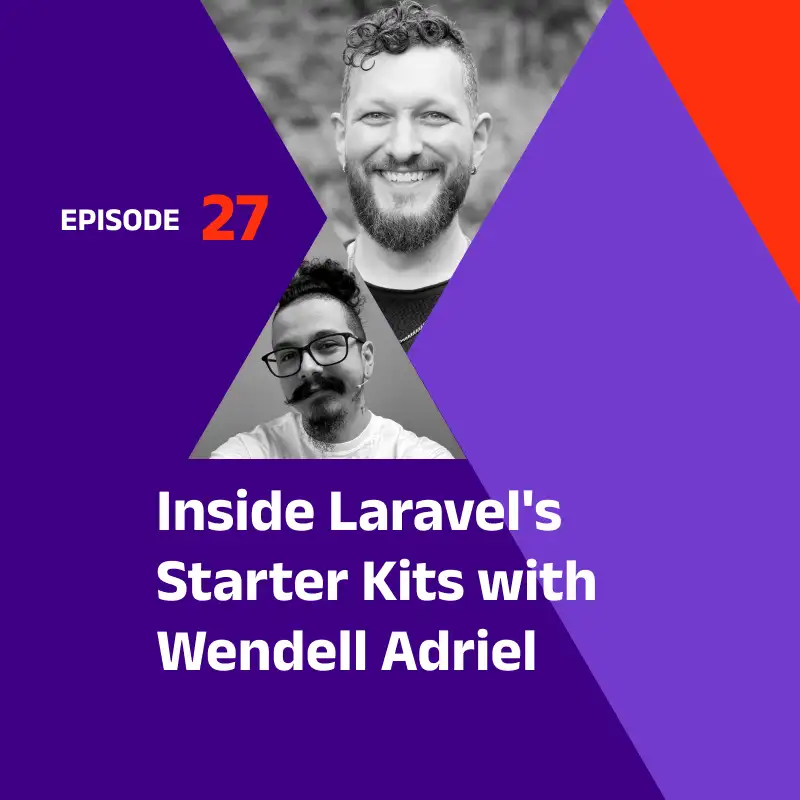
Inside Laravel's Starter Kits with Wendell Adriel
The Laravel Podcast is brought to you by Tighten,
your friendly neighborhood Laravel experts.
Check us out at tighten.com
and also by other sponsors you will hear about later in the episode.
Hey, and welcome back to Laravel Podcast Season Seven.
I'm your host, Matt Stauffer, CEO of Tighten.
And in this season, I'm gonna be joined every episode by a member of the Laravel team.
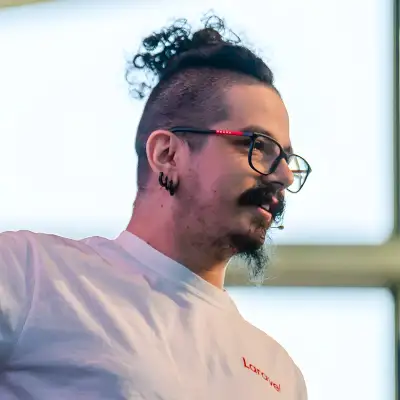
Today I'm talking to my friend Wendell Adriel, senior software engineer at Laravel.
So Wendell, can you say hi and share a little bit about what you do at Laravel?
Sure, sure.
Hey, thanks.
And thanks, Matt, for inviting me.
It's a pleasure to be here.
I joined a Laravel recently.
I joined in January.
So uh it's just a few months that I've been there.
However, it's been pretty exciting to work there.
I've been mostly working on the starter kits.
So everything that's coming out for the starter kits, almost everything, the only thing
that came out recently that I didn't work out for the starter kits.
was the PASKIS.
The passkeys were done by Ben.
But other than that, I think anything else that's went to the starter kits from January
until now, I touched it somehow and working on it.
And it's been pretty, pretty cool to be working with the starter kits, learn a lot of
things, and it's very different from what I used to do before.
Yeah.
I've been using uh working mainly on SaaS projects, like really big, complex SaaS
applications.
And it's been really a a a a different shift to work on open source, like full time, but
it was something that I wanted to do for a long time.
So I'm loving it and and it's been pretty, pretty exciting.
Well, that's cool.
So I want to dive all into the starter kits.
I actually have a tool that I was building that we decided to sunset that was starter kit
related.
And I know you guys have been building something.
I forget the name of it.
So I'm I want to talk all about that.
But before we do that, let's talk about your history.
So go as far back as you want.
It can be childhood, it can be high school, it's gonna be whatever, but like what is your
origin story for getting to where you are today?
When you were you first getting into programming?
You know, what got you there in the first place?
What did you do?
But did you have an entirely different career?
Like what brought you to the point, which we'll get to in a second, but first, what
brought you to the point where you're thinking you know what?
I'm gonna apply for a job at Laravel?
Okay, okay, so yeah, that's funny.
I'm going to start very early, as I said.
I'm going to my teenage years.
I've been like since childhood, I really like loathed like video games.
So I think almost everyone thought, okay, I'm going to start learning programming, I'm
going to make games, and that's it.
So that was my first idea.
I wanted to create games and and that
What were your favorite games at the time?
Like what kind of games were you really into?
I I really loved like like platform games like even like Super Mario World and all those
things, but one that I loved and it was I think it was the second game I played on Super
Nintendo that my mom got me was Prince of Persia.
And man, that that that game is so good.
It's so good.
I love that.
I lost the count of hours that I I played that that game.
So
Did you see there's a thing recently where the guy who made it or someone connected with
the guy who made it showed the original videos that he took of his brother that he used to
basically like trace the like the different movements of clambering up the wall and
everything like that?
I don't know if you saw that.
It was so fun.
He literally took a crappy little camcorder, you 640 by 640 camcorder and told his
brother, Hey, go climb up that wall.
And you see this movement, and then they show the him tracing that same movement, but in,
you know, whatever, 16 pixels.
And it's like,
This is so cool.
You know, so it was fun.
I did I didn't see that.
I need to check it out.
I'll try to let it down.
Yeah.
But yeah, this was like my idea.
I wanted to create games.
But before even starting with programming, I started working with other things.
Like my first job was delivering stuff.
So I was delivering like cartridges for printers.
That was it.
My first job.
Then I
Sort of tech related.
Yeah, that that's that's true.
And then I went to another job that I was like teaching in Brazil, it was very common back
in the days to have like schools that uh places that had like different courses on how you
can work with Word, Excel, like office the the office thing and like work with Windows for
like other people or like children to learn the basics.
So I started working on a place like that.
because a friend of mine was working there and he invited me to work with him there.
And it was pretty cool.
Like in the first six months that I was there, I had access to all the courses that they
had, and they had a PHP course there.
And I started learning PHP there.
And the funny thing is, after like six, seven months I was there, one of the teachers that
was teaching the PHP course left, and they asked if I wanted to jump in.
And I was like, I don't know a lot because.
Yeah.
I started learning like some months ago, but yeah, let's do it.
And and it was pretty fun because I was teaching people something that I was learning, but
for me it was the best way to learn more because I had to push myself to really understand
those things because I had to teach that to other people.
So it was pretty cool.
It was like amazingly cool for me.
And that when I like loved like programming.
And one of my first languages was PHP.
So I really loved PHP from the beginning.
So this is how I started programming.
From there, I still had like for many years I had a 9.5 job and I was working with some
freelancers, some projects, creating like small websites, small, like just internal
programs, softwares for like friends or
people that my family knew, so was things like that, small things.
And I even and this is a curious thing because I even worked before going to programming,
I even worked in forensics.
I worked for one one year and a half.
I had this job in Brazil that it was a public, like working for the government.
And they put me to work in the forensics department.
I was doing not like
Of course not the the field work or anything.
I was in the office.
But even so when people needed some things, like I I was helping them, like checking a lot
of cool stuff.
I even had some experience doing like forensics on on like computers, hard drives, phones
and everything, just trying to find things that we we needed to find, like pictures or
videos and try to catch
the people doing something bad.
So it was pretty fun.
And I love the job as well.
Yeah.
Like I think it was the first time I really thought, uh, should I do something different?
Because I really liked what I was doing there.
But at the end I decided to go like full uh in software development.
I was living uh my family uh still lives there.
It's a really small town in Brazil.
It's in Minas Gerais.
It's the state.
It doesn't have like i i it's uh in the countryside, it was really a small town, so we
didn't have a lot of jobs for software development there.
Right.
So I had to move.
And then I decided to like, okay, now I I'm I was doing already, I don't know, maybe five,
six years of freelance jobs, just freelance other than my night five.
And then I said, Okay, I'm going to drop everything that I'm doing, I'm going to
move to a new city and I'm going to start working in software development.
And that's what I did.
And it was then back in 2015 that I started working full-time in for other companies as a
software developer.
And it was pretty cool because the first interview I got in this new city, I was not
living there yet.
I was just doing interviews and sometimes I
Went there, did interviews, came back to my city.
And the first interview that I did, the guy just asked me, Hey, have you ever worked with
Laravel?
And I was never, never heard of that.
And the guy, man, it's it's an amazing PHP framework and everything.
At the time I was working like with cake PHP.
twenty fifteen, so Larrel was pretty new at the time.
Yeah.
And then the guy said, No, he said, Yeah, we can hire you because of that and everything.
But he said, Go home and learn it.
Check, yeah, check it out and learn it.
And then I did that.
I went home, I checked Laravel, and I said, Man, that's that looks pretty good.
And I started learning Laravel, and in a few months I already uh I started working in a
company that was not working with Laravel.
We were working with Symfony at the time.
However
I was still doing freelance jobs and every time I got some freelance gig I was doing
Laravel.
So so that's how I learn about Laravel.
Someone just say to me that I should learn it because it was pretty good.
And it was.
So I I'm pretty happy that interviewer
Yeah, you gotta find that guy and say thank you.
Yeah.
So it's amazing how things go.
And I always wanted like to work like on open source, full time.
It was something I use it to like do some things on open source, try to create some
packages or try to do some contributions every now and then and everything.
But I always wanted like to try to work full time on open source.
And I remember back on 2016, if I'm not mistaken.
Taylor posted the first job for Laravel uh at the time.
And I remember that I sent my CV.
I th I think okay.
I know like Latavell for one year and so, so probably I'm not going to repick, but but I'm
going to send any exactly.
And it didn't work.
And to be honest, I think that I I even joked.
around with some people on Slack these days because I I said I think they hired me because
they were like already tired of getting my C V so many times.
Like just give the guy freaking job already.
Bring this guy on, let's let's do in some
my god, that's so funny.
Because I uh from this until um the beginning of the year, I think I I sent at least six
to eight times for different roles my C V Yeah.
So I I never I never gave up the the and it worked out.
We're going to talk about this second.
I'm going take a real quick break and read for some sponsors and then we'll be right back.
And thank you as always to our sponsors for making this podcast possible.
Our first sponsor is Honey Badger.
Move fast and fix things with Honey Badger's intelligent error tracking and application
monitoring for Laravel.
It's everything you need to keep production healthy and users happy.
Get your free developer account at honeybadger.io.
I've said this before, but Honey Badger are some of the OGs of exception tracking.
They've been around since the early days, long before even Laravel existed.
Wonderful human beings, so grateful to them.
And of course, as always, we are sponsored by Laravel, the wonderful folks behind Laravel
Cloud and LarCon US.
Laravel Cloud is the fastest way to deploy Laravel apps, and it also solves all sorts of
common problems that keep web artisans from shipping.
And LarCon US is the premier in-person event for all web artisans to come be with your
people, level up.
And leave ready to ship faster and better than ever.
So check those out at cloud.laravel dot com and Laricon.us.
Okay.
So you mentioned that you put in your kind of six applications.
Were you primarily working at that one company that did Symfony during the period before
leading up to Laravel?
Or you did you jump to other places?
Like, did you ever actually get to work in Laravel as your day job before you joined
Laravel, the organization?
Yeah, I did, but it it took a while.
After I I worked in that place that was working with Symfony, I actually went to a totally
different thing.
I worked with Java for for some time.
What?
Yeah.
I was working in a company that that created applications for banks or banking
applications, and most of them in in Brazil use Java.
So I I was working with Java.
And at the time I was working with JavaScript to create mobile application for that bank.
And at the time, if I'm not mistaken, the name of the library was Cordova, Cordova,
Cordova or something like that.
That was the first JavaScript based kind of multi or the first big one, so Yeah.
yeah.
And it was like Angular one and Cordoba to create the mobile application and Java was the
whole back end thing that that was supporting it.
So yeah.
uh
Different stack.
That's a different world.
Very different word.
And I continued using PHP and Lava for my side gigs.
Yeah.
And it was on Brazil still.
And after one year and a half, I got an opportunity to move to Portugal to work here in
Portugal in a company called OLX, and they were using PHP.
It was not Laravel still, but they were using PHP.
And I thought, okay, okay, let's let's try it.
And I did the interview process and they liked I was hired, so I had to do all that visa
thing to to move to here, and it was like pretty intense because from the interview until
my move, it was like three months, and I had to do a lot of things in those three months
to move to Portugal.
And I moved here to Portugal and started working with with OLX.
I was there for one year only, but it was pretty cool.
And after that I got hired in another company.
That was the company that I was working on before joining Laravel.
It's called Crack Street.
Yeah.
That's the one I knew about you working at.
So tell me more about Trek Street.
Yeah, Trek Street it's a company that the main application that they have, it's brand
protection SAS.
So in there they were using Laravel.
So it was pretty cool because I wanted to work with Laravel full-time.
And the other thing that was pretty cool, they were using Vue.js.
And I loved Vue.js because after Angular like launched uh Angular 2 and it was completely
different from what was Angular 1.
I was I don't think I like this anymore.
And I started using View.
So um and it was pretty cool because it was the stack I wanted to work with.
And I I started working there in 2018, the beginning of 2018.
So I worked almost eight years there before joining Laravel.
And I started as a senior engineer.
After some time, I went to a lead engineering role.
After some time I was working as the solution architect for the company.
And uh for a small period of time I was doing engineering management, but I didn't like
it, so I asked it to go back to the my old role that was solution architect, and after
that I joined Laravel.
So there
It was very cool because I had never worked so many times in the same company.
Yeah.
It's pretty cool because we see like the results of the decisions that we do.
Because if you work like in a place for a short period of time, you may do some things and
see some some decisions that were made, but you don't know how that's going to play in the
long time, uh in the long run.
And it was pretty cool working there because I did see a lot of things that went good and
a lot of things that went bad in the long run.
So I learned a lot and I also learned a lot not only in the technical aspect of it, but
also other skills.
Because before, like I I was extremely and I'm still am, but I was extremely shy to talk.
Like if I went on a meeting, uh the first time I went on a meeting that
had like six people there, I just froze because I was not being able to even talk
correctly because I I was so stressed out.
And they helped me get a lot of things better in terms of communication.
And I had also a lot of understanding to get more into business logic, how to talk
Not only with technical people, but I also talk with a product because when I was
especially in the solution architect, I had to do like a lot of things that were not
coding.
To be honest, I was not doing almost any coding.
It was just talking with people, decisions, a lot of documentations, diagrams and
everything.
So it was a very different experience for me, but it was
Pretty good.
I I think like I I learned a lot this the during this period.
Love that.
I mean, you really saw a lot of the different aspects.
I mean, you were an individual contributor, you were a freelance consultant on the side,
you did engineering management, you did small team leadership, you did, you know, the
solutions architect, you were dealing with business people.
That really sets you up to be somebody who is at a a pretty high level of your involvement
with larger teams.
So it's very interesting to think about having all that experience and saying, you know
what I want to do is I wanna cause open source.
Now, open source does keep some of those things, and I want to hear your thoughts.
But like people don't often think you're gonna do that and you're gonna rise up the ranks
and you're gonna get to leadership levels.
And then you what I want to do is I wanna be an individual contributor in the open source
level, where you're not with a team of 50 where you're in charge and you haven't, you're
not a CTO, whatever.
You're just like, I just like doing this thing.
So when you moved to work to Laravel, I know part of it was just wanting to work at
Laravel, right?
You'd said that.
You're like, I applied six times.
Was part of it also wanting specifically to have this type of work?
Because you also mentioned that you like open source.
So was this
If you were to pick your job in Laravel, not just to get to Laravel, but pick your job,
would it be open source?
Or were you like, I mean, I I I mean, I actually would have preferred this, but I will
just take any job with Laravel.
Like how much were you looking for this specific role?
When I uh like I already applied to other roles on Laravel that were not open source
because it's Laravel, right?
Yeah.
Yeah, yeah.
But when I saw the w this one for open source, I said, man, this is like my my dream job.
I really wanted this to work out.
And this was one of the primary things because as I said, I was like eight years at the
other company, already had like
A very good relationship, and I still have a very good relationship with everyone there.
So for me to let go, like I built a career inside that company.
So for me to let that go for something different should be something that I really wanted
to do.
And one of the things is that as I said when I was we as the solution architect, I was not
almost coding anymore because I was just doing a lot of meetings.
lot of documentation, diagrams, talking with people the whole day and everything.
And I was missing to build things, to, to create things and codes and everything.
And this was one of the points.
And the most important was that I really wanted to like to work with open source full
time.
And having this opportunity for me was like amazing.
So yeah.
It really was the it was the it was Laravel who you love, open source that you love, just
kinda came at the right time.
So what was the process of applying like?
I mean, you mentioned you'd applied six times.
So you knew what sending in your your your resume to them looked like, but what was
different this time around?
And what surprised you, I guess?
Yeah, so I already had a lot of things and every time that I'm going to apply to
something, the thing that got me most uh confused on how I'm gonna do is the cover letter.
So yeah, I think that the sixth time I applied to Laravel, I created six different cover
letters because I I never knew what what I I would say there.
And and and uh this last time I created a cover letter more focused on like
on what I already did uh and contributed to Laravel specifically because I was doing some
contributions lately to Laravel before joining.
One of the biggest contributions I did was the HTTP batch for the HTTP client.
So I tried to like put those things because I thought okay maybe this is this is going to
to to help me.
And and another thing that I did
And I hope I can say it, is that I I tried and and I thought, okay, I don't have anything
to lose.
So I'm going to send the CV, I'm going to send a cover letter.
I'm going to send an email to Taylor directly saying that I really want that that job.
I mean, and honestly, for some people that might just be annoying to Taylor, but for you
specifically, Taylor merged your PRs, right?
He reviewed the code that you did.
He probably gave you some notes and did some back and forth and he merged your PRs.
So of any time for someone to do something like that, when you've actually had a valuable,
beneficial interaction with Taylor, that's I'm not saying everyone should just directly
email the guy, but it really makes sense in your context.
So
Yeah, yeah.
And and I thought like that, like, okay, so recently I had this PR and we had a back and
forth because the PR was open for several weeks with back and forth on changing things and
getting feedback from Taylor and changing stuff.
So I I thought, okay, probably he remembers me from from from that pull request or
something.
I'm going to send an email and see what it gets.
And Taylor was was pretty open.
He he asked me, okay
What's like what's your expectation or w what you're doing?
So we had it it was not a long shot, it was a short one.
And at the end he said, Okay, I'm going to talk with the team and we are going to see how
it goes.
And it went uh I don't know, maybe two weeks or something like that.
I was like, man, I don't know if that thing's going to work and everything.
And then I received an email for the first interview and I was, Oh
That's pretty good because the other times I applied, I was never even called to
interview.
So that's a really good progress.
And I did the first interview and they said, Okay, we are going to talk and see how it
goes.
If w we want to to move, you're going to receive another email to schedule a second
interview.
And second interview, from stinky, it was going to be with Joe Tannenbaum.
That's my manager now.
So I was okay.
Okay, that's that's good.
So I waited, I don't know, maybe one week or something like that, and received an email
saying that I I was going to the second interview.
I was all man, that's that's amazing.
That's so good.
And then I had uh and I was man, I was so nervous to talk with Joe.
I was so nervous when I started talking.
But and I told him that he was so like lighthearted.
And it felt like like an interview.
It was like us chatting here.
So it was so good.
He made me feel so comfortable that it went pretty good because I started pretty nervous.
And and then it was again like, okay, if we are going to see, we have still more people to
interview and everything.
And if everything goes right, we're going to have another interview.
And it was going to be with Andre.
the the VP of engineering and I I think it was two weeks or something like that when I got
an email saying I was going to to to do the the third interview and I was man now now now
I'm getting I'm getting close.
Now I'm getting close and and it was pretty cool.
I had this interview uh Andre, same as Joe.
I was pretty nervous at the beginning but if he made me feel very comfortable during the
interview.
And um then he said me, Okay, we are going to talk and uh when we have a final decision,
we are going to let you know if if you are going to be hired, or even if you're not, we
are going to give you some feedback.
Okay, that that's good.
Because there are other companies that they don't tell you if you're not hired.
It's just you just
Left in a limbo.
So yeah, so and it was pretty cool when I received the the news that I was hired because I
remember that I was working but I was not working from home because the that day my wife
had a conference in another city, so I drove her in the other city.
I was going to like a coffee and shop and working from there.
And I was there when
I saw a message on LinkedIn from Andre saying, Hey, can you jump in a call in like
fifteen minutes?
And I was of course.
Yeah, whatever, whatever it is.
And I was okay.
So there's two possibilities.
Or I'm hired or I'm not hired.
So let's let's keep it calm and everything.
But but when we started the call and and Andre said, Amen, we we are going to hire you,
man.
I I was so happy.
uh So happy.
So I I I I was man.
Cause like the as I said, like the first time I I sent like my CV was almost like ten
years before that.
So nine years.
Yeah.
And I was like, man, I finally achieved something that I really wanted to do for a long
time.
So it it felt so good.
All right, so we're gonna pause.
We're gonna read from another sponsor for just a second.
We'll be right back.
And thank you to a new sponsor, Laricon AU.
Laricon AU returns November 4th to 6th in Brisbane, Australia, with deeper learning,
practical insights, and ideas that will stretch how you think about building with Laravel.
Get your tickets now at Laricon.au.
And I gotta say, y'all, Michael Durinda is one of my favorite human beings in the entire
world.
And the Australian developer community and the, you know, the the entire area that comes
together to Laricon AU is just.
So wonderful and kind and welcoming.
And obviously not everybody can come the whole way out there, but if you are anywhere near
Australia and you can come to Laricon AU this year, I couldn't recommend it more.
I will be there, I'll be speaking.
But even if I wasn't there, I would recommend it.
Wonderful people, wonderful conference, wonderful organizer.
Definitely check it out.
Okay, so you're at the coffee shop, you have the call with Andre, you're starting at
Laravel.
What is your first assignment on day one?
man.
Yeah.
So when I got that notice, I still had to do like my notice on the other company and it
was like the end of the year.
So we defined, okay, you are going to start working on January after the holiday season.
So I I okay.
So my first day was January five this year.
And during the first day I was mostly just getting to know how things worked.
So setting up things.
a lot of things to set up, services, email, everything.
And uh I had a call.
Uh we have a like an onboarding buddy s when we joined.
So uh it was Francisco that's here from Portugal as well.
Yeah it was yeah he walked me through the lot of things even that he's not in in the same
thing he's working on cloud but he he walked me through everything that I needed to know
when starting work there.
And
And it was pretty cool.
Like the first two days, I think I was just getting to know everything, getting to set up
everything, getting permissions with everything.
And my first assignment was to to check on the starter kits and understand how they were
like working, checking like for pull requests, issues and everything, going through them,
uh check if I can do anything there.
It started like that.
And I don't think it was the first talk I had with Joe, but one of the first talks I had
with Joe, Joe said, okay, we know that it's very hard to maintain all those starter kits
because it had at the time it had it didn't have this valve one, but it had the React,
view and and the live wire.
Uh and each starter kit has different variations, right?
It has like
the work quest variation.
It has like the blank variation that doesn't have anything.
So it has a lot of variation.
So he said you're going to see that it's like it's a pain point that we have.
It's maintaining and syncing everything.
Because most of the times when someone was like doing an improvement or a fix on a starter
kit
They were doing the stack they are comfortable with.
So most of the times someone it's like doing a pull request on React or LiveWare or View
doing an improvement.
And then we needed to manually go and do the same changes for the other starter kits.
So it's creating all the pull requests, merging everything.
So he said, Okay, we're going to do this for for some time for you to understand the pain.
Yeah.
But then we need to think on how to solve that.
And one of the first things I did was okay, I was working with the pull requests and
issues, making sure I was closing everything, working with uh all the starter kits, making
them like without any issues open, any pull requests open, and doing some small
improvements.
And then one of the first like big projects was okay, now you need to figure out how we
can improve that.
And that's when I started working in what
Today it's we called Maestro.
That's the orchestration for for the starter kits.
I worked with that during a long time, just it's public.
It's not like I think it was public on March.
I'm not sure if it was March or end of February.
However,
I've been working on on this since January and I think that uh it stayed uh just internal
for a long time because we were improving things, making sure everything was working
before going public, because this was going to be like the main source of contributions
after it it went public.
So we wanted to make sure that it was working correctly without having issues for
contributors.
So and it was one of the biggest
projects I worked at so far in Laravel was creating Maestro and it was so fun to work with
because it it it was a really different thing that I didn't work with something like that
before.
So it was pretty cool.
I I learned a lot of things and it was pretty cool to okay make this work and then after a
while using it I saw okay but oh this thing I'm doing it like manually a lot of of time
and things let me try to automate this other thing.
And okay, we still have those things that are duplicated with Windows starter kits.
How I can I improve that?
And it took a while until it is what it is today, but it was pretty cool to work with.
It was pretty interesting, pretty cool.
And I'm pretty happy with the result on how Maestro is is working right now.
So I'm I'm pretty excited that we were able to like create and release that.
And it's working because we already already received a lot of contributions from people uh
on Maestro.
So I'm happy with the result.
So how I understand Maestro is that it is a single source of truth for the what's core
across all the starter kits.
And then it's also an understanding of what's different across each starter kit.
And if you want to change anything, whether it's what's different or what's core, rather
than changing the starter kits, you're changing myestro it's basically rebuilding.
And it and now the starter kits themselves are really just like replica are does that make
sense?
They're just they're just built output, sort of like the the illuminated components,
right?
They are just manually or automatically split out.
Starter cuts are similar now, right?
Is that kind of what it's doing?
Yeah, exactly.
Exactly.
So Maestro today it knows when you are working with Maestro, you can first, if anyone
wants to contribute it, you don't need to understand how Maestro works because the files
are split between layers.
There are files that are common for all starter kits, so they go into a layer that's the
shared layer.
And then there are different layers, but you don't need to understand that because when
you go into Maestro, you can just build
one of the starter kits that you want, let's say that you know very well how to work with
React.
Then you can build the React starter kit and it's going to create a build folder and start
a watcher that when you change anything in this build, it knows where those those files
should be copied to.
So you you don't need to put out.
Yeah
I literally thought you had to understand the underlying architecture, modify it, and then
you could just build it.
So holy crap.
So yeah, so if you know LiveWire, you set up your LiveWire version, you make your changes
there, and the watcher says, if you change that in the LiveWire one, it rolls it back into
the source so that next time it builds the others, they all get those same changes too.
So cool.
yeah, yeah.
So th this is one of the like coolest things that I like maestro is that because uh you
you don't need to really understand what maestro is doing because it abstracts that for
you.
You can just build something that you already know, that's the starter kit.
It's a live application with the stack that you know, you do the changes and maestro knows
where to put those files in.
Very cool.
Ah, I love this.
Okay.
So what's what are you working on today?
Are you still working on this or have you moved on to something else since since you
released this?
So after releasing it, I'm working with a lot of things it's still related to starter
kits.
For example, I worked in the Teams support for starter kits that was released as well.
I worked on several other improvements for starter kits, not related to starter kits.
One thing that I worked on, and it was released some weeks ago, was the font plugin for
the Laravel Vite plugin.
I don't know if you saw it, but basically
Basically, now you have in your Vite config file you can have the configuration for fonts.
So you can add fonts from Google fonts, from bunny fonts, and everything.
And the plugin it's going to take those and it's going to download those things and make
them local so you don't need to like preload them from HTTP every time.
Yeah.
And it's going to create some helpers for you, creating CSS variables that you can use and
CSS variables that you can use across your code with the fonts that you define.
So it's an abstraction.
Like you have with next fonts, for example, it's something like that, or Astro, if you
already work with Astro, Astro does something like that.
So it's like that, but out of the box from Laravel.
So you just add a fonts directive.
Uh in in Latavel and it's going to load those phones for you.
So uh
That's fun.
I like that.
I mean, it's gotten easier in the last years to say, I'm gonna take one of those web
fonts, I'm gonna download it, I'm gonna put in the right place.
But still it always has felt like a little bit of like a dance of like, nope, you put it
in the wrong place, or you grab the W O F one and you're supposed to have the W O F F two
or whatever else it ended up being.
So just knowing that all you could just say, get this for me and I'll handle it, I I love
that.
That's very exciting.
Yeah, yeah.
It's very cool.
And for me, even for me, I used to do that for almost all projects.
Like, okay, I need to get that font, so I need to download it, put it here, then uh then
go in the CSS.
Okay, load this front front here and everything.
But now it does everything automatically for you.
You just need a small configuration in your Vite config and everything it's it's working.
That's so good.
Well, thank you for contributing that.
So one of the things I had mentioned about the starter kits is I had a vision years and
years and years ago for how we could make it so that people can deal with exactly the
problem you're talking about, which is starter kit changes being able to roll out to other
ones.
And my idea was that the bigger problem was going to be keep like rebuilding your starter
kit every single time a new version of Laravel came out.
And so I was thinking every starter kit could be kind of represented as a uh
set of changes that gets applied to a stock Laravel repo.
And I started building that.
It was called Mies.
And at some point I just realized that the the number one group of people who needed this
was the Laravel organization.
And you guys are going to build something that was more specifically tailored to your
needs than this.
And there's not a lot of other people who are doing a lot of work maintaining it.
But there was always something in the back of my head being like, maybe I should have put
time and energy in this.
Well it never had the vision that you did for my Estros.
So I'm like I couldn't be happier that I didn't go forward with that thing any further
because that's that's so brilliant.
And this fonts thing, I know it's smaller, uh but that's a nicety that I really have.
So where did that come from?
Is it just something you popped in your mind?
You're like, you what, fonts drive me nuts, or did somebody assign you to work on it, or
what was that workflow like?
That that was a project that Joe was already thinking about.
Because of that, like uh like me or and a lot of other developers, like the pain of okay,
manually setting all the fonts is that hey man, we have these like in in other stacks,
like we have in Next, in Nuxt, in Astro, we have those things that are done automatically.
We should check what we can do with our plugin for Vite and come with something that's like
fits right in in in Laravel applications.
And then I I started working on it after some iterations, we got like the final API.
And it's the the the if you see it's pretty simple.
It's a pretty simple API like a Laravel uh API that's elegant and simple.
And you just put it there and it works.
So it's it's pretty cool.
And it and it was very uh cool for me to work because I had never worked with a Vite plugin
before that
So I had to learn a lot of things while working on it.
So it was it it was very good.
I like working with different things because I I like to learn new things.
So I love when I need to do different things like this.
That's awesome.
I love that.
So is there anything because I we're kind of getting close to time.
Is there anything that you're looking forward to that you're allowed to talk about?
Because I know there's always when I ask what's next, they're like, we can't say that.
So is there anything you're allowed to talk about that you are looking forward to on
that's on your plate in the next three to six months?
sure, sure.
Okay, so a lot of things are still internal, so I I I can't talk as you said.
But the thing that I'm very excited and this is something that when I started working with
the starter kits, I was uh talking with Joe about it's trying to get an API starter kit
there.
Because
Yeah.
I love working with APIs.
In Track Street, we had like an API that we created.
That API is huge today.
Like when I left the company, it was already with 300 endpoints or something like that.
It's a massive API and everything.
And I think that like it was missing something specific for APIs for Laravel, an official
thing.
So I was talking with Joe and he agreed.
So
On Maestro, there are already two pull requests that are in drafts there.
But it's almost there.
We are thinking on releasing them.
We don't have release dates set yet, but we want to release it very soon.
So very soon we are going to have the API starter kits there.
And it's going to be pretty good.
And I I can say a lot about it, but we are going to have something for a package as well,
if you want to create packages.
It's still ongoing, but there there is also something that we are working there for people
that are creating packages.
Okay, very cool.
Yeah, we have one of those meta starter kit package skeletons.
There you go, package skeletons that we've used for our packages in the past.
But I sure wouldn't mind if there was just an official way to do it and we didn't have to
make our own.
So very cool.
I know you can't talk about that anymore.
So we kind of covered your journey from elementary school or middle school all the way up
to what you're working on today.
Is there anything that you wanted to talk about today?
Anything you wanted to share to the people, any kind of things you're really into that you
didn't get a chance to talk about today?
well, I think that's uh almost everything we talk a lot of of things and man to talk about
software development I could talk the whole day.
I can find a lot of topics to to discuss.
Well, if somebody wants to meet you in person, are you attending any of the conferences
coming up for the rest of this year?
I'm attending Laravel Leave UK.
Okay.
It's on eighteenth and nineteenth this month.
I'm going to be there.
I'm going to be talking there.
I'm going to speak.
I'm going to present a talk about metaprogramming in PHP and how Laravel uses
metaprogramming to create the DX that we love from Laravel Framework.
So I'm going to I'm going to talk about it and I'm going to be on Ladacon US as well.
great.
Okay.
So we'll get a chance to see you in person.
Thank you so much for the the Vite font plugin for all your work on Maestro and the the
starter kits.
And actually just get to to see and people who aren't watching the video, this is a
friendly guy.
I'm just like, I just want to see you in person because I wanna I want your energy to rub
off.
So I'm like, yeah, let's do this.
So
Yeah, man, let's let's do it.
Let's do it.
Are are you going to be on Marvel Leave UK or Warcraft?
I won't be at Live UK this year, but I will be at Laracon US.
So I will see you there.
Normally Laravel Live UK's videos are not streamed or recorded.
I'm assuming that's still the case this year.
So we're just gonna have to ask you to give that talk again some other time where when the
rest of us can see it.
So
Yeah, yeah.
I am happy to do it.
I love it.
Well, Wendell, thank you so much for hanging out.
It was such a pleasure gonna talk to you for a little bit.
It's so cool to hear your story and I'm looking forward to meeting you in person in Boston
and I'm sure some other folks are looking forward to your talk at Lairville Live UK and to
meet you there.
So real thank really appreciate you, man.
Thanks, thanks, thanks again for inviting me.
It was pretty cool.
And yeah, let's let's meet and have a coffee or something on Laracon.
Sold.
All right.
For the rest of you, thanks for hanging out and we'll see you next time.
Creators and Guests